
How Often Should a Bar Be Renovated? Don’t Be Fooled by Renovation Companies
My former boss’s bar went seven years without a single brick or tile being touched. The scratches on the bar top could fit a pen, the leather seats were polished to a shine, and customers even said the place “has character” — in reality it was just proudly old. Then a new bar opened diagonally across the street; once the lights came on and the sound system started, a third of our regulars left. The renovation cycle isn’t something you can settle with “three years or five years”; it’s about when you start feeling the sting of the electricity bill and getting fed up with the yellowing spotlights on the bar.
Are You “Repairing” or “Replacing” When You Renovate?
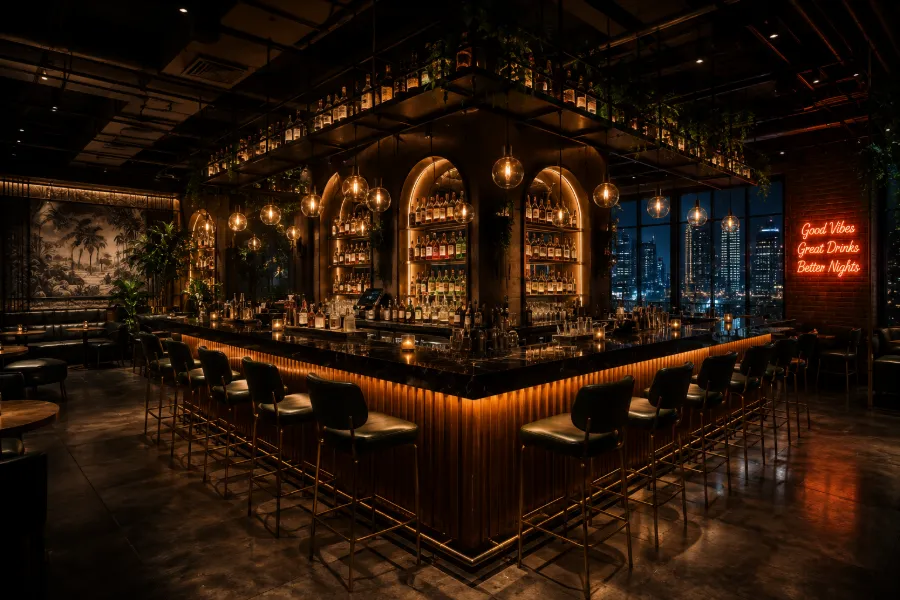
First, clarify one question: Do you want to operate at this level, or just get by?
Industry has a blunt truth: maintenance‑type renovations and strategic renovations are two different things. Maintenance renovations are swapping a burnt‑out bulb, patching peeling walls, replacing a broken seat cushion – these issues start showing up 6–12 months after opening. Strategic renovations involve upgrading the whole lighting system, re‑configuring the space layout, redesigning the bar flow – these usually trigger in the third to fifth year and become a life‑or‑death decision.
Many owners treat “tinkering” as a renovation: first year they fix a bar corner, second year they replace a batch of spotlights, third year they paint a wall. Money is spent, but the result looks like a patched‑up phone case – it looks okay from afar, but up close it’s all seams. By the fifth year, the neighboring venue has a new lighting system while you’re still swapping bulbs one by one.
Maintenance renovation is like putting a screen protector on an old phone; strategic renovation is like getting a new iPhone. No matter how many protectors you apply, the chip can’t go back to its original performance. Ask yourself: are you opening a bar to tell customers “we’ve replaced every bulb,” or to make them think “wow, this place has changed”?
Three Signals That Your Bar Is “Expired”
Don’t wait for customers to vote with their feet. I’ve distilled three quantifiable renovation triggers; if two of them appear, it’s time to act.
Signal 1: Bar sales drop for three consecutive months year‑over‑year, after ruling out holidays, nearby roadwork, and other external factors. I’ve been through this – three months of reports each showing a 5‑8 % decline. The first instinct is to blame marketing, but the real issue is a stale space. Regulars stop coming, new guests are put off, and any marketing spend is just pouring water into sand.
Signal 2: Regulars start saying “nothing’s changed.” This is more dangerous than a sales dip. Sales can be propped up with promotions, but “nothing’s changed” means the space has become background to customers, no longer a reason to post on social media. The deeper cause is that lighting layouts evolve; your three‑year‑old design no longer meets current aesthetic standards. Check the 2026 Top 10 Most Popular Bar Lighting Layouts; you’ll see today’s lighting tactics are on a different dimension from when you opened.
Signal 3: Per‑square‑meter lighting energy consumption is 30 % higher than at opening. Light output decays, a fact many owners don’t know. LED modules lose 20‑30 % of luminous flux after about two years; the lights may still be on, but illumination is at 80 % of its original level. To maintain visual impact you end up adding more fixtures or extending operating hours, and the electricity bill creeps up. Measuring illuminance is the most direct method – take a lux meter to the seating area; if the reading is a quarter lower than at opening, it’s a warning sign.
I once saw an owner who had all three signals but hesitated for six months, saying “renovate in the off‑season.” During that time, two neighboring bars renovated and reopened, and his monthly revenue fell from 400 k to 80 k. He finally renovated in tears, only to find his regulars never returned. When the signals line up, delaying the renovation usually means it’s already too late.
| Renovation Signal | Diagnosis Method | Recommended Window | Wrong Approach |
|---|---|---|---|
| Customer loss | Track repeat‑customer ratio | Within 3 months | Post flyers to attract new customers |
| Revenue decline | Compare current period to same period last year | Within 6 months | Direct price cuts and promotions |
| Noticeable light decay | Measure illuminance | Within 1 month | Only replace bulbs, not the whole system |
The “Three‑Chunk” Cost Trap
Many bar owners make a mistake the first time they renovate: they only calculate one line item. The total renovation cost actually has three big chunks, but most people only see the first.
Chunk 1: Equipment procurement – lights, sound system, wallpaper, tables, chairs. This is the bait most renovation firms use – they give you a low‑priced list and you think, “That’s cheap.”
Chunk 2: Construction labor – demolition, rewiring, installation, testing, cleanup. The trap here is that the quote lists “basic labor,” but during work you get many add‑ons – you need to patch walls after demolition, you need a new ceiling after wiring, etc. A friend’s bar was quoted ¥80 k for labor, but the final bill was ¥160 k.
Chunk 3: Downtime loss – the real hidden killer. While the doors are closed, revenue drops to zero, and regulars who can’t get a drink will go elsewhere and form new habits. In a full renovation, equipment typically accounts for 35‑40 % of costs, labor 25‑30 %, and downtime loss 25‑35 %. In other words, if you spend ¥100 k on lights, you should be prepared to set aside at least another ¥100 k for labor and lost revenue.
Why spend more on proper wiring and testing? Because if the lights are installed but the wiring is poor, the effect never materializes and the equipment cost is wasted. Look at the 20 Best Bar Lighting Ideas; you’ll see that truly effective lighting solutions rely on precise installation and calibration.
When I renovated my first bar, I only counted equipment costs. Light fixtures cost ¥60 k, which didn’t seem much. After the crew arrived, they discovered the wiring was outdated and needed a complete overhaul, adding ¥40 k in labor. Worse, the planned three‑week shutdown stretched to seven weeks before we could reopen. During the closure we had no revenue but still paid rent and staff salaries; the two‑month loss was roughly twice the equipment cost. This lesson taught me that the real cost of renovation isn’t the numbers on the purchase order, but all the cash you burn from start to stable operation.
The Real Renovation Cycle – By “Type,” Not “Years”
Renovation cycles should never be a one‑size‑fits‑all “every three years.” Your bar’s type determines the rhythm, just like a car – a sports car and a minivan don’t share the same tire‑change schedule.
Community pubs and light‑weight bars can stretch the cycle to 5‑7 years. Their appeal is the sense of history; patrons come for familiarity and relaxation. Over‑renovating would destroy the atmosphere. As long as lighting is maintained, seats aren’t sagging, and the bar isn’t leaking, a major overhaul every seven years is fine.
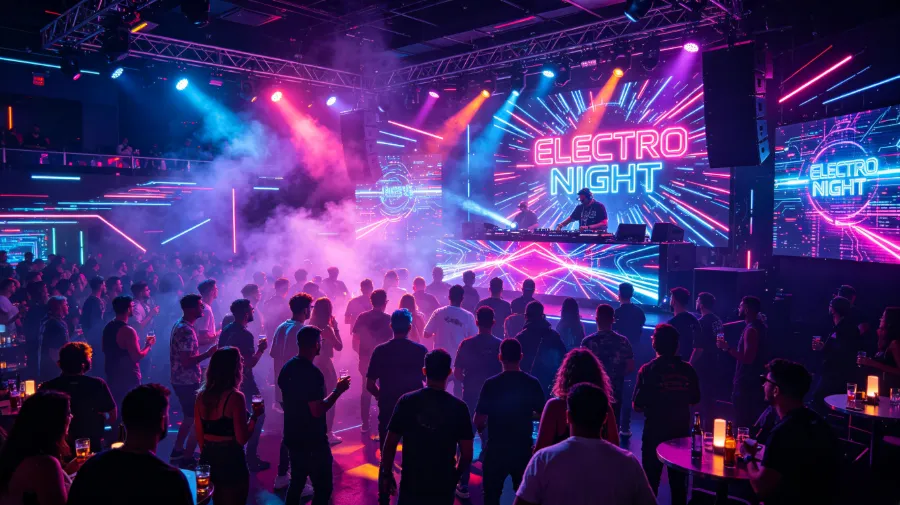
Electronic music clubs and party bars need a full update every 2‑3 years. Their selling point is sensory stimulation; the lighting system is the core product. When new lighting tech arrives, the old system looks outdated. Here’s a first‑person comparison video –
When a new club uses pixel mapping and music‑synchronised lighting while you’re still using a manual color‑mixing board, patrons can instantly tell which generation the venue belongs to. When I was selecting a lighting system, I studied VYLEN’s solution; they embed the lighting upgrade cycle directly into the system architecture, so later upgrades only require swapping LED modules, not rewiring. That detail made me realize – renovation doesn’t always mean tearing down walls.
KTV private rooms have a 3‑4‑year cycle. The rooms are closed environments; immersion depends heavily on lighting and sound. When LED output decays or microphone echo worsens, customers stop renewing rooms.
Live‑stream studios are the most special – they need adjustments every 1‑2 years. Streaming gear evolves rapidly; color‑temperature standards for fill lights and background lighting layouts change yearly. If your competitor upgraded their green‑screen system yesterday and you’re still using a single‑point light, the visual quality drops a tier and tip‑jar numbers reflect that immediately.
Three “I Thought …” Mistakes That Most Often Lead to Renovation Disasters
I’ve collected a basket of pitfalls from my own experience and that of peers. Here are the three most common, each starting with “I thought …”.
First “I thought …”: I thought swapping a few expensive lights would be enough. The result? The lights cost ¥3 k each, but the control system remained the cheap DMX controller. The new fixtures didn’t communicate with each other, so the lighting looked patched – the bar area was glaring, the seating area was dim like a cellar. Later I studied award‑winning cases and learned that great lighting isn’t about expensive individual fixtures, but about a system that can sync. Even award‑winning projects hit wiring issues; renovation is never that simple. A designer’s article on the story behind an award‑winning bar lighting design – debugging, accidents, and unsolved mysteries – details how three nights of debugging were needed.
Second “I thought …”: I thought renovating in the off‑season wouldn’t hurt business. Off‑season does have lower foot traffic, but it still has revenue pillars – e.g., Friday‑Saturday evenings. A colleague started construction in March, planning 25 days, but due to a lighting supplier shipping the wrong items and a sound‑team scheduling conflict, the project stretched to 52 days. He missed the Golden Week holiday entirely. The lost revenue that month would have funded another half‑renovation.
When I was drafting a renovation plan, I compared several vendors; VYLEN’s delivery manual explicitly states that lighting and sound must be installed and tested together – a detail many contractors overlook. Their 2026 edition space renovation handbook review shows each step’s timeline down to the day, not a vague “about three weeks.”
Third “I thought …”: I thought a full‑service contract with the renovation firm would cover everything. This is the biggest illusion. Renovation firms excel at flooring, painting, and plumbing, but lighting design and sound design are entirely different professional systems. I’ve seen the most outrageous case: a bar planned a 25‑day renovation, but lighting and sound crews kept pulling each other’s legs – “Your lighting rig blocks my sound cable,” “Your speaker mount blocks my speaker.” The project stretched to 52 days, missing the entire holiday period. No one coordinated the cross‑disciplinary handoff, and both the bill and schedule blew out.
FAQ
Q1: My bar has only been open for a year. Do I need to renovate?
No. If a bar under a year shows a traffic dip, first examine menu, service, and marketing – it’s unlikely to be a space issue. When a renovation is truly needed, limit it to small soft‑fit changes, like new cushions or adjusting light color temperature, rather than tearing down walls.
Q2: Is “renovating” the same as “changing wallpaper and lights”?
Absolutely not. Renovation is a system‑level operation that includes flow redesign, lighting system upgrades, acoustic optimization, and other deep changes. Swapping wallpaper or a light is just maintenance; its effect lasts at most six months and will eventually make the overall style chaotic.
Q3: How do I retain regulars during a shutdown renovation?
Start teasing the renovation two weeks in advance, share renderings with your regular‑customer group to build anticipation. During the shutdown, run limited‑time offers – e.g., a “renovation countdown cocktail menu” – so patrons think of you even while they’re elsewhere. I’ve seen a bar run an “old‑item exchange” where regulars helped pick new seat fabrics; those participants became the first paying customers on opening day.
Q4: I want to renovate but can’t spend a lot. Are there low‑cost options?
Yes, but you must understand the trade‑offs. The most effective low‑cost route is to upgrade only the lighting system – replace fixtures with high‑CRI LEDs and add a smart dimming system. This can boost the overall feel by over 30 % while costing only a quarter of a full‑store renovation. Don’t expect a cheap solution to fix layout or sound issues; those hard problems won’t be solved by cutting costs.
Q5: Is the lighting system the part worth spending the most on during a renovation?
Yes. Lighting directly determines visual hierarchy and atmospheric quality, and it’s the upgrade most customers notice. A good lighting system delivers higher luminous efficacy and lower heat, saving electricity so that the payback period can be as short as six months. Moreover, lighting technology evolves quickly; a system chosen three years ago is likely already two generations behind.
Share Article