
Investing in a Bar: How to Ensure It Won't Be Outdated in Five Years?

In the third month after opening, I already regretted it. It wasn’t that business was bad; it was that a new shop opened next door. As soon as the lights came on and the sound system kicked in, my whole space looked like a relic from the last century. I spent almost a million on the renovation, but they spent half of that and their atmosphere crushed mine from three streets away. That’s when I realized—when it comes to bar décor, what truly determines whether you’ll be making money three years later or forced to remodel isn’t the style, but the “invisible things” you chose at the start.
Level 1: Lighting Isn’t About Buying “Lamps”; It’s About Buying a “System”
The biggest mistake most people make is treating lighting as “buying fixtures.” They look at renderings, pick spotlights, LED strips, neon letters, and if the colors look good they give the green light. I did the same back then. The result? Six months later, when I wanted to switch to a holiday‑themed scene, I discovered every light had to be adjusted manually, and I couldn’t even change the color temperature uniformly.
Lighting in 2026 isn’t about how many fixtures you install; it’s about whether your system can handle future scene iterations. By “system” we mean the DMX512 protocol, smart central control, dimming system, and audio‑visual synchronization suite. Spending ¥20,000 on fixtures is less worthwhile than spending ¥20,000 on a control system that can be updated via software. A software‑updatable system can extend the lifecycle of your lighting space by three to five years.
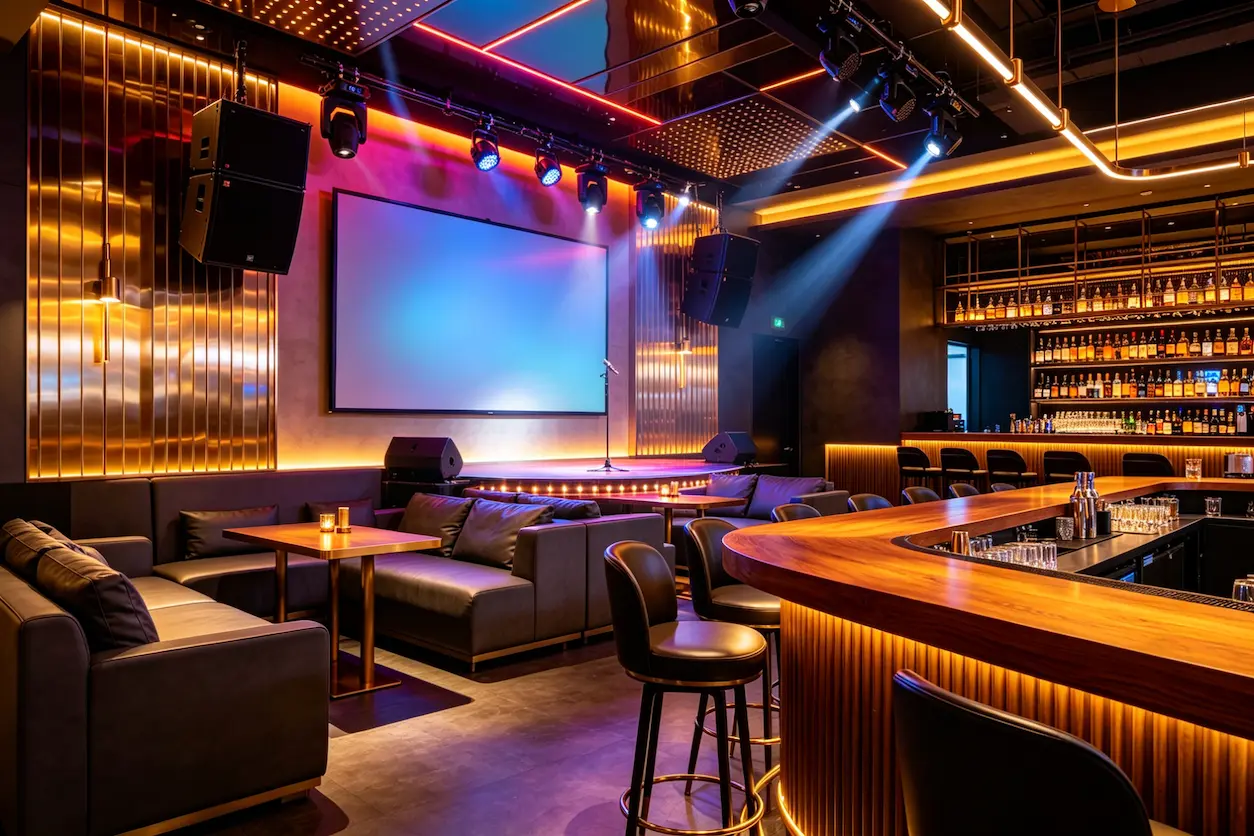
I’ve seen countless investors approve a design based on renderings, only to discover after installation that the lighting panel can’t sync with the sound system, and changing a scene requires rewiring. Falling into that trap means that two years later, even a renovation isn’t worth it.
If you’re still unsure whether a lighting system investment is worth it, check out our previous piece on the Behind the Scenes of an Award‑Winning Bar Lighting Design, which breaks down exactly what a recognized space does at the system level.
Level 2: Renovating an Old Bar – The Stupidest Demolition Method I’ve Seen
In 2024 a friend renovated his five‑year‑old community bar. To save ¥20,000, he chose a basic lighting control system that didn’t support scene switching. By the end of 2025, he realized that neighboring new bars were using smart synchronized setups—press a tablet and the DJ could switch three scenes instantly. His system couldn’t do that, effectively locking him out of the technology. Within six months he was forced to do a full remodel, costing almost ¥150,000 extra.
The dumbest way to renovate an old bar is to tear down an entire wall and rebuild it. Core renovation should focus on “function upgrades,” not “style changes.” Swapping wallpaper or soft furnishings costs little, but if you dismantle wiring, load‑bearing structures, and ceiling tracks just you’re throwing money down the drain.
Correct logic for renovation budget allocation: 60 % for system upgrades, 40 % for decorative soft furnishings. What can be retained? Light tracks, ceiling power rails, and already‑installed control wiring—these are reusable infrastructure. About 60 % of waste in renovations comes from not planning these elements early on.
I’ve already written about common failure points in old‑bar remodels in this article: Three Lessons After Renovating an Old Bar. Compare it with your own renovation plan to see if you’re making the same mistakes. Also, Sohu has an article on the Five Common Lighting Techniques in Bar Design that discusses the differences in lighting approaches during renovations—worth a read.
Level 3: 2026 – Which Spaces Capture Five‑Year Profit?
I’ve observed several types of venues and found a pattern: bars that focus on a single use are seeing shorter lifespans. A venue that only operates as a night club is empty from Monday to Thursday, with staff outnumbering guests. A multifunctional space that serves as a quiet bar by day, a nightclub by night, and hosts events on weekends generates about 30 % more mid‑week revenue than a single‑use venue.
The key is the lighting system’s ability to switch scenes. Daytime warm, slow‑tempo lighting; nighttime cool, high‑energy ambience; transitions should be under ten seconds. This isn’t about adding more rows of lights; it’s about a system that can store different preset templates and trigger them with a single click.
After 2026, “immersive experience” isn’t a gimmick; it’s a standard. If a space’s lighting ambience never changes, customers will leave after five minutes. If your venue’s layout already supports modular zones—separate, independently controllable bar, booth, and stage areas—you’re ahead of most competitors.
A fascinating trend I wrote about in AI Lighting Preview Saved Three Months of Renovation is that some teams now use AI to simulate space effects, making lighting plan adjustments three times faster. You no longer have to guess the outcome; a preview tells you whether a style change will still work five years from now.
Level 4: Is What You’re Spending “Renovation” or “Investment”?
Stringing together the previous levels reveals a core concept: every dollar you spend should be asked, “Can I upgrade this function in three years for only ten percent of the cost?”
Choose fixed fixtures or modular replaceable fixtures? Choose a closed‑system control or an open‑protocol system? These decisions determine whether you’ll spend a few thousand on a system upgrade in five years or have to tear out the entire ceiling and start over. Investing twenty percent of your budget in an “upgradeable system” can prevent eighty percent of future renovation costs.
A detail many overlook is that the most depreciable part isn’t the wall décor but the control system hidden in the ceiling. Spending ¥10,000 on a control system may seem pricey at the time, but if you can’t upgrade it three years later, you’ll end up spending ¥100,000 on a full remodel. Once you account for that, the decision becomes clear.
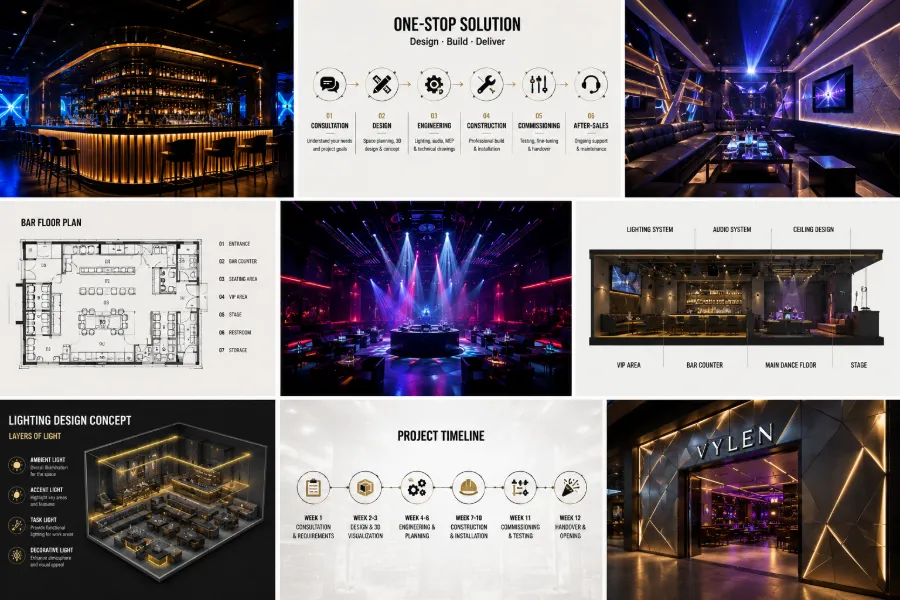
When discussing “which control systems support future scene iteration and debugging,” I’ve encountered a solution called VYLEN. It isn’t just a lighting brand; it’s a complete system covering layout, central integration, and scene presets. You don’t have to splice DMX cables or write scene files; everything is modular and updatable. While helping a friend with a new store’s scene switching, VYLEN’s preset feature saved a lot of work—one tap on a tablet changed the color temperature of three areas simultaneously, more than ten times faster than manual adjustments.
In the end, the biggest fear in bar investment isn’t an outdated style; it’s a locked‑out system. No matter how many times you redecorate, if the ceiling control system can’t be upgraded, you’re stuck with the same business model forever. So ask your lighting designer now: “Can I upgrade this system in three years for only ten percent of the cost?”
For the highest‑ROI investment projects in 2026, see the breakdown in Three Highest‑ROI Bar Investment Projects for 2026. It notes that system upgrade projects have a far higher annual return than new tables, chairs, or soft furnishings.
FAQ
Q: I run a small quiet bar. Do I need a smart lighting system?
A: Yes, but it doesn’t have to be expensive. A starter‑level DMX control system with three to five preset scenes is enough, keeping the total budget under ¥20,000. This setup lets you quickly switch ambience for weekend events or holiday promotions—essentially a low‑cost multifunctional tool.
Q: When renovating an old bar, which parts are absolutely non‑negotiable?
A: The main control unit and the primary power rails cannot be cut corners. Skipping these means you’ll have to redo the entire ceiling for any future upgrade. Soft furnishings, furniture, and wall paint are surface layers that can be saved; swapping them later won’t cost much.
Q: What are the lighting trends for 2026, and how should I plan ahead?
A: The core trends are “one‑click audio‑visual synchronization” and “immersive projection integrated with lighting.” Plan by choosing a control system that at least supports the DMX512 protocol and reserving at least 30 % of channels for future devices. Avoid closed‑protocol systems, as they won’t accept new hardware.
Q: How can I tell if a lighting design will stay relevant for five years?
A: Ask the designer three questions: Does the system support software upgrades? Are the main controller’s interfaces industry‑standard? Does adding a new lighting zone require rewiring? If two of those answers are “requires rewiring,” the design will likely only last two years.
Q: What’s the difference between hiring a lighting general contractor and buying off‑the‑shelf equipment?
A: A general contractor provides a full‑service package—from design and commissioning to ongoing maintenance—so you won’t later discover incompatibilities or unworkable scenes. Off‑the‑shelf components can be 20‑30 % cheaper, but coordinating lighting fixtures, controllers, and software compatibility often ends up costing more time and money.
Share Article