
Why Immersive Entertainment Spaces Are Trending? Four Changes I’ve Seen Firsthand

Last month a friend sent me a video of a newly opened livehouse. The lighting array behind the stage changed color slowly like breathing, and the whole space was enveloped in a mist of purple and orange light. He said, “People even take selfies at the bathroom entrance of this place.”
I’ve been in stage lighting for a few years, and I went through the most basic stage—just installing a ring of marquee lights in a bar and calling it done. The standard back then was simple: make it bright enough, because you can’t drink if you can’t see your face. But in the past two years, when friends consult me on plans, their questions have completely changed. They say, “I want an atmosphere that makes people want to pull out their phones the moment they walk in.” A single well‑crafted atmosphere photo on social media drives natural foot traffic faster than any platform promotion.
A bar that installed an intelligent lighting system topped the local hot list in its first month, with an average of over 300 visitors per day. The place had no signature dishes, its drinks were average, and the only thing that set it apart was that every light in the space was designed for “emotion‑driven” effect. This is not decoration; it’s a reversal of business logic.
From “Just Bright Enough” to “Emotion‑Driven” — The Evolution of Lighting Roles
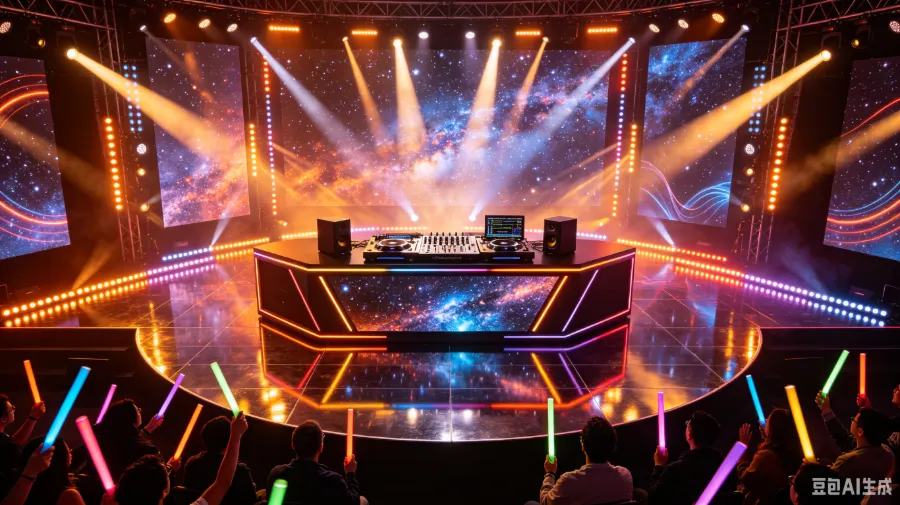
When you walk into a venue, the first things you notice are temperature, sound, and light. Light is the quickest: you don’t need to listen to an entire song to know if it’s good; a quick glance upward tells you whether the place matches your vibe. Early bar owners only cared about whether the tabletop was clear enough to see dice pips. Later, people started demanding “a higher level,” so they installed a few crystal chandeliers. Now, no one even mentions “level”—they ask directly, “Can we adjust the lighting for each table individually?”
Behind this shift is an implicit driver: the filter effect of social media amplifies the commercial value of venue lighting. A store‑tour video with tens of thousands of likes may be due solely to a ceiling lighting array that transitions colors in sync with the music. Lighting is no longer just part of the environment; it becomes the content itself.
Today, professional commercial space design includes RGBW fixtures, intelligent dimming systems, and audio‑visual sync control consoles in the budget from the selection stage. The design logic has shifted from “illuminating the space” to “rendering emotion”—every extra minute a guest stays changes the conversion rate. My personal takeaway is that in the past, proposals rarely needed to consider how they would look on a phone camera; now that’s the first gate in design review.
How Spatial Narrative Completely Changes the “Opening a Business”
The traditional opening process looks roughly like this: the owner hires a renovation company to produce a set of renderings, construction follows the drawings, and finally a few lights are installed and it’s done. Immersive entertainment spaces follow a completely different logic. Their design starts with a question: “What story does this space want to tell?”
Take an intelligent lighting sync system: you don’t need to manually draw every color scheme; with a single click you can switch between multiple scenes, smoothly transitioning the entire space from “afternoon tea mode” to “late‑night party mode.” Changes in light intensity and layering directly affect the customer’s spending rhythm—dimmer lights accelerate purchase decisions.
Two years ago, a new KTV flagship with 36 private rooms opened in Nanshan, Shenzhen. After installing an intelligent lighting system throughout, the rooms’ repeat‑visit rate rose by 40% and customer satisfaction reached 98%. This wasn’t a coincidence; spatial narrative directly impacted business metrics. Before opening, I spoke with their team, and the owner’s exact words were, “I’m not afraid of higher renovation costs; I’m afraid of not being able to retain people after opening.”
In fact, whether it’s a KTV or a bar, the essence is managing an atmosphere that makes people want to stay. From design to construction, a venue’s success largely depends on whether everyone involved understands this intent.
If you currently have a commercial space project, hiring an experienced lighting integration team is more controllable than contracting multiple separate vendors. Teams like VYLEN integrate spatial design with lighting systems from the start, rather than waiting for construction to finish and then bringing in a lighting contractor. The advantage is that you can predict the post‑opening lighting effect during the planning stage, instead of discovering lighting gaps after completion.
Of course, if you’re interested in these ideas yourself, checking out 20 Best Bar Lighting Ideas can also provide plenty of inspiration.
The Most Expensive Area Isn’t Necessarily Lighting — But When It Fails, It’s Definitely Lighting
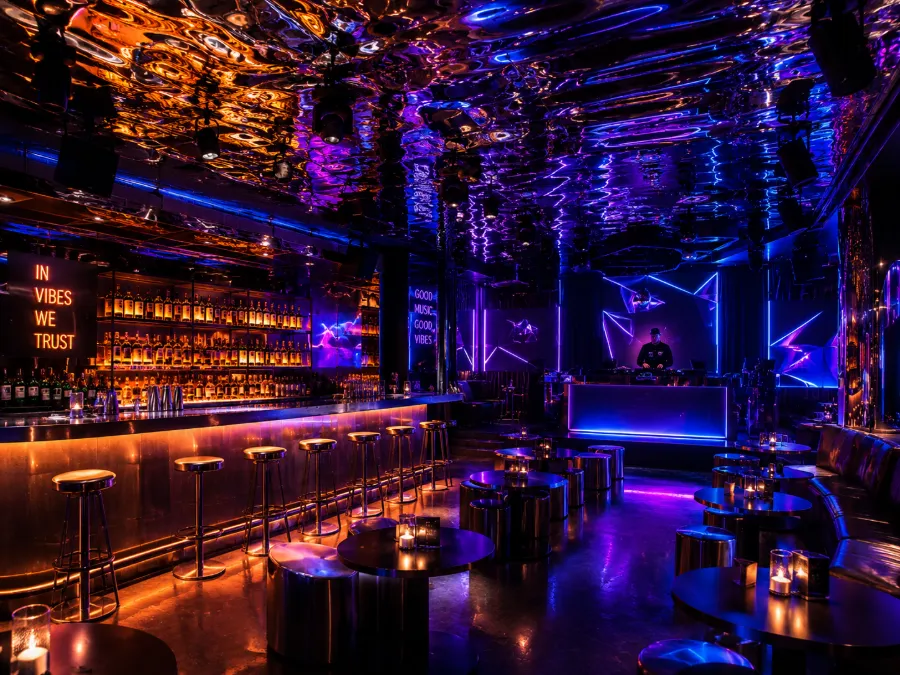
I’ve seen countless owners who were confident before opening but then complain after opening. The most typical case: a bar spent its entire budget on custom furniture and soft décor—each table was solid‑wood custom, the walls featured a full set of artistic graffiti, but the ceiling lighting array was installed by a random electrician using a Taobao diagram. In the first week, the first three days’ revenue was okay, but on the fourth day, comments appeared saying “the photos look much better than the actual place,” and foot traffic started to decline.
The problem lies in a common misjudgment: most investors overestimate the impact of lighting hardware and underestimate the difficulty of integrating lighting with spatial layout and acoustics. Whether a space looks good isn’t determined by the number of lights, but by how lighting and sound interact. Low‑frequency vibrations from the sound system can cause physical resonance in fixtures, and circulation design determines the angle from which lighting should be introduced to avoid glare. These details are beyond what a typical home‑electrical installer would consider.
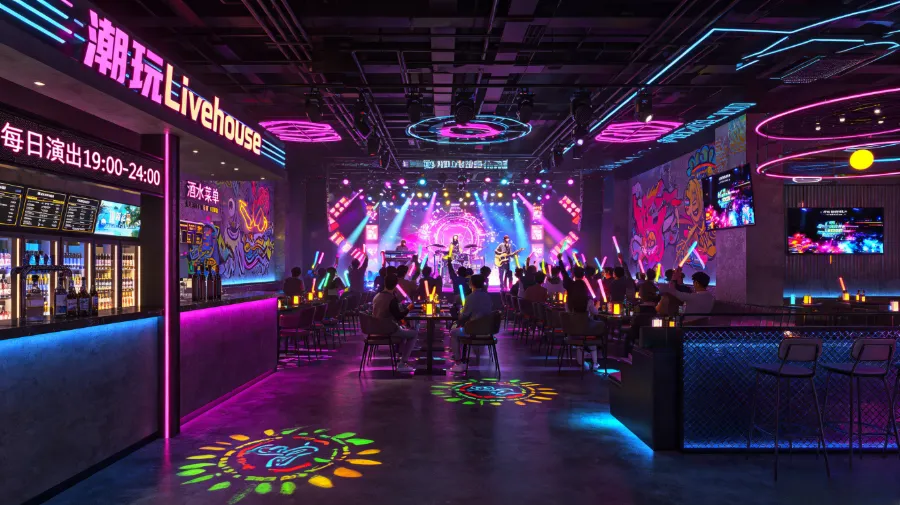
That bar went through three months of trial and error, switching three different lighting contractors, each complaining that the previous one’s wiring was all wrong. In the end, the owner had to dismantle and redo all the lighting equipment, ending up spending 40% more than if the correct solution had been chosen from the start. He said something I still remember: “If only someone had told me earlier, I should have had an expert review it first, instead of starting construction and then figuring it out.”
This is why we place technical discussions like Bar & KTV Lighting Design: Using Light and Shadow to Create Immersive Entertainment Spaces early in the design process, which can save up to 80% of later rework costs.
Three Irreversible Trends in Immersive Space Design Over the Next Five Years
The first trend is clear: programmable lighting matrices will become standard fixtures, not a highlight. If you tell a client today that “this light can change color,” they think it’s nothing special. In five years, a lighting system that can’t switch mood modes per event will be seen as “unfinished basic renovation.”
The second trend is that immersive experiences move from a “one‑size‑fits‑all” approach to “granular customization.” Instead of a single atmosphere for the whole space, the bar, booths, and dance floor each have independent lighting moods, synchronized without conflict via smart central control. This also means fixture selection shifts from “the best” to “the most compatible”—no matter how expensive a light is, if it doesn’t match the acoustic field, the result is a negative.
The third trend is systematic thinking. In the past, many investors focused only on average ticket price or gross margin, overlooking that post‑opening traffic conversion is directly determined by spatial design. A new investor should, at the site‑selection stage, clarify what kind of lighting layout the space suits, rather than scrambling after signing a contract. If you’re still unsure about location, this analysis on How New Investors Can Quickly Choose a Site for a Profitable Bar Opening can help you avoid many pitfalls.
By 2026, over 60% of newly opened entertainment spaces will list intelligent lighting systems as a standard feature rather than an optional one. This isn’t a prophecy; it’s a trend I’ve observed in project proposals—this year, two‑thirds of clients who asked me for a plan proactively requested an “intelligent solution” instead of just “lights that work.”
I’ve used VYLEN’s intelligent central control system on several projects, and the most tangible benefit is a significant boost in debugging efficiency. Previously, adjusting the lighting for a medium‑size private room took two days; now, with cloud‑based debugging and preset scenes, I can finish three rooms in half a day. This trend isn’t driven by anyone; it’s the market’s own vote.
If you want to explore further, this article on 2026 Nightclub & KTV Lighting Design Trends also offers useful references.
Frequently Asked Questions
Q1: What is the price range for immersive lighting renovations?
It depends on the space’s area and fixture density. For a small bar (under 100 m²), an intelligent lighting retrofit—including equipment and installation—typically ranges from 80,000 to 200,000 yuan. For medium to large spaces (over 300 m²), costs start at about 300,000 yuan and have no upper limit, mainly determined by the complexity of lighting programming and the choice of control system.
Q2: Will the construction period be long for retrofitting an old venue with immersive lighting?
If it’s just swapping fixtures and adding intelligent central control without rewiring, it can be done in about a week. If new wiring, ceiling structure adjustments, and acoustic considerations are needed, the timeline extends to two to three weeks. Most old‑venue renovations are done at night to avoid disrupting daytime operations, but it’s advisable to reserve a three‑day buffer for opening‑day testing.
Q3: Are small spaces suitable for immersive lighting?
Actually, they’re even more suitable. Small spaces have easily controllable lighting and don’t require kilowatt‑scale equipment; a few RGBW light strips with smart driver modules can create depth. Moreover, lighting changes in a small area deliver a stronger sense of immersion to guests because the light fills their entire field of view.
Q4: Will lighting effects become outdated quickly?
The hardware won’t become obsolete, but some overused color schemes will. For example, the all‑purple lighting that was popular three years ago is now fatigued. The solution is to choose an intelligent system that supports OTA upgrades; manufacturers can continuously update the scene library, keeping the hardware current.
Q5: Can non‑technical people manage such a system?
Modern commercial intelligent lighting systems come with visual operation interfaces—not programming tools, but drag‑and‑drop palettes similar to a color wheel. Most systems allow you to preset common scenes as “dinner,” “party,” or “quiet” buttons, which staff can switch with a single tap. In practice, the only stage that requires technical knowledge is the initial installation and debugging; day‑to‑day maintenance hardly needs any expertise.
Share Article