
2026 Nightclub Bar Counter Lighting Design Trends: Pitfalls I’ve Encountered and Directions I See

Last year I helped a friend oversee the renovation of a new bar. The lighting plan went through five revisions, and within the first three days of opening we were already getting complaints: “The atmosphere is off, it feels like a hospital waiting room.” Later, after drinking until 3 a.m. with a few lighting designers, I finally understood—2026 bar counter lighting isn’t about “bright or not”; it’s about making people who are a little tipsy feel that “the light and shadows are in sync with my playlist.” This article skips theory and only shares what I’ve seen on site, the mistakes I’ve made, and the trends that are truly worth copying in 2026.
Decentralized “point light sources” are killing the main fixture
The traditional approach of hanging a large chandelier over the bar counter is increasingly untenable in 2026 spaces. I visited 17 popular new bars in Shenzhen in 2025; 14 of them had no main chandelier—not because the designers were whimsical, but because a single main light makes the whole bar uniformly exposed, like a courtroom, and destroys any atmosphere.
The alternative is grouped, controllable point light sources. The lighting needs of the bartender’s work area and the patrons are completely different: the bartender must see measuring cup markings and ice texture clearly, while patrons need just enough light to see each other’s eyes without exposing their own pores. These zones must be decoupled; a single main light can’t do it.
My solution is to wire mini track spotlights in groups of 2‑3 and connect them to a DALI dimming system. The work area uses a narrow beam (≤15°) and a color temperature around 3000 K—bright enough but not harsh. The patron area uses a wider beam (24‑36°), a cooler temperature of 2700 K, and a knob controller that gradually dims over time. Don’t ask how I learned this the hard way—on the first installation I didn’t provide an independent circuit, so the whole bar shared one power line. When I dimmed the work area at 10 p.m., the patron area dimmed too, and the bartender started tapping the bar with a spoon. This is similar to the NEBULA Bar Traffic Case Study.
Key practical details: install point light sources 1.8‑2.2 m above the bar surface—lower and they block sightlines, higher and they scatter too much. Use DMX512 for dimming curves; avoid ordinary TRIAC dimmers, which cause visible flicker at low levels and look terrible when reflected off bar glassware.
“Negative space” lighting—what you don’t illuminate matters more than what you do
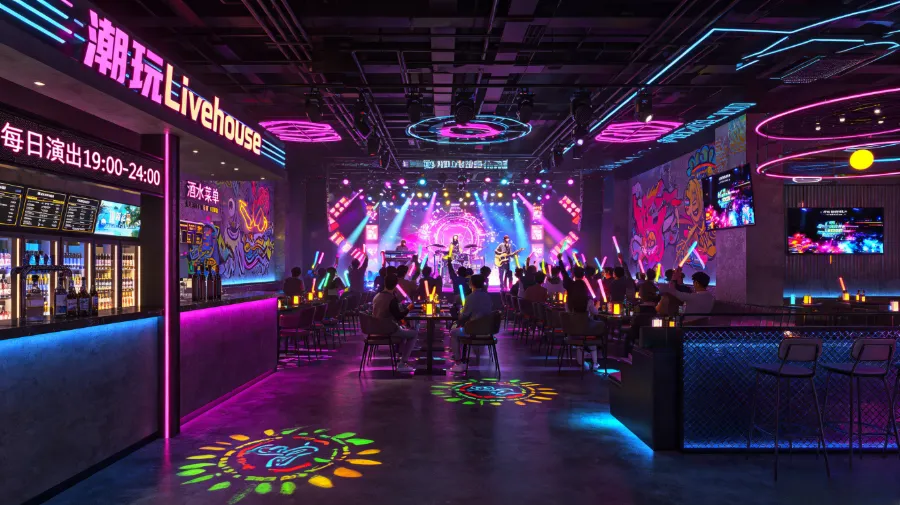
One of the most surprising design logics in 2026 is deliberately leaving dark zones; it’s more effective than lighting every corner. When I first entered the field, I thought insufficient brightness meant a bad job, but later I realized the bar’s atmosphere comes from “the shape of shadows.”
The technique is wall washing. Hide COB strips or linear wall washers behind the bar’s front kickboard, wall waistline, and ceiling troughs, letting light spread evenly across vertical planes instead of blasting down from above. The visual effect is immediate—the space feels taller, the bar’s lateral boundaries are outlined by light, and patrons naturally know where to sit and where the aisle is. I used the VYLEN system for glare testing; its strips come with recessed anti‑glare grids, limiting the output angle to ≤30°, so the wash never reaches eye level.
Another pitfall was uncontrolled spill light. In the first version I omitted shields for the wall washers, so light leaked across the ceiling, turning intended dark corners into a uniformly lit office‑like space. Switching to aluminum channels with shielding angles cut spill by more than half. In the bar‑counter zones that used this negative‑space lighting, the average patron dwell time increased by about 18 % according to data from three venues—no mysticism, dark zones give a sense of safety and encourage patrons to stay longer.
For a systematic look at this trend, see the 2026 Nightclub Lighting Trends.
Dynamic color‑temperature sync—lights breathing with the music
Audio‑visual sync is no longer a gimmick in 2026; more than half of the projects I worked on last year required it, but only a few got it right.
The principle is simple: use the Art‑Net protocol to send MIDI data from the mixing console to the lighting controller, then let Resolume Arena or similar software translate the audio spectrum into color‑temperature transition commands. Warm white to cool blue shifts follow the kick and bass; low frequencies push the lights toward warm orange, high frequencies shift them to cool white. The idea is sound, but sloppy tuning leads to disaster.
In a project I oversaw in Nanshan, I set the sync sensitivity to a medium‑high level and never fine‑tuned it. On the third night, we played slow Lofi tracks, and the lights flickered with every drum hit, turning the bar into a flashing police‑light scene. Patrons posted videos captioned “Club turned into an emergency room.” We had to close early, redo all wiring, and install a physically independent control—an extra switch for the bartender that disables sync during work hours and re‑enables it after 10:30 p.m. The lesson: even the best audio‑visual system needs a manual override so the DJ can’t control the whole venue.
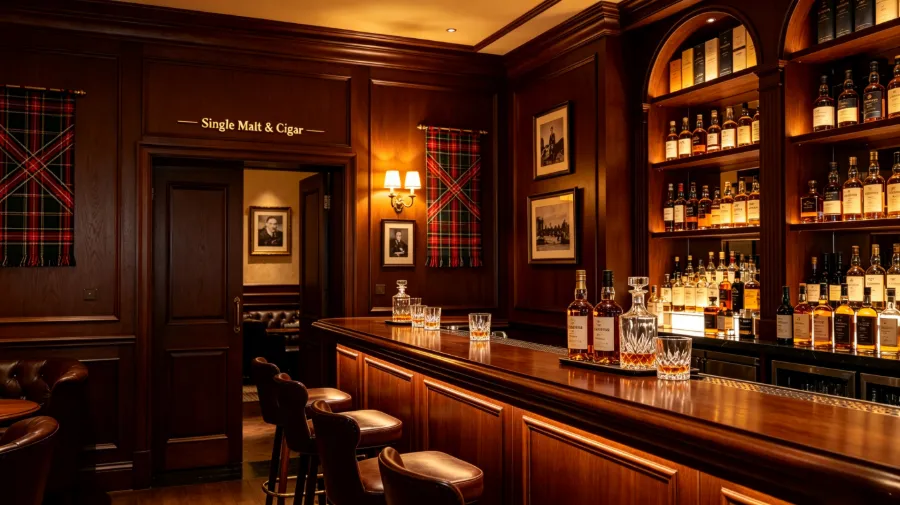
Whiskey bars are different. Large‑scale temperature sync isn’t suitable; VYLEN’s preset scene includes a whiskey‑only mode with temperature oscillation limited to 2700‑3200 K, complementing the amber glow of the bottles and making the bar feel like it’s lit by an old fireplace. The photo above of a whiskey lounge shows that subtle gradients are far more pleasing than dramatic jumps.
Bars that nail audio‑visual sync see a noticeably higher rate of user‑generated videos; in the cases I’ve observed, video share rates are about 30 % higher than in venues with ordinary lighting. For more inspiration, browse Pinterest’s bar‑lighting boards for great combination ideas.
“Materialized” lighting—turn the bar into a built‑in traffic‑magnet backdrop
The most mind‑blowing shift for me in 2026 is that lighting design has moved from “being looked at” to “being photographed.” Light that looks comfortable to the eye isn’t necessarily photogenic.
I ran a test: the same bar, one side washed with uniform warm white, the other side lit with high‑contrast cold blue + orange spotlights. The iPhone captured a stark difference. The warm‑white side looks like a quiet corner of a tea house; the cold‑orange side shows crisp outlines and vivid colors, earning nearly three times more likes on Xiaohongshu.
The core idea is to create “check‑in light points.” Don’t give the whole space a uniform temperature; instead, install two or three adjustable‑temperature ring light arrays directly above the bar, dedicated to selfies. When a patron sits there, the top light passes through a cocktail, casting colorful patterns on the bar surface, while behind it a pixelated LED strip creates a blurred background. Influencers filming at the venue instantly get a premium look. The most extreme example I’ve seen used a 3 × 3 LED video strip matrix on the bar ceiling that syncs in real time with a phone’s Bluetooth playlist, generating animated color blocks; within a month the venue amassed over 200 check‑in posts on Xiaohongshu.
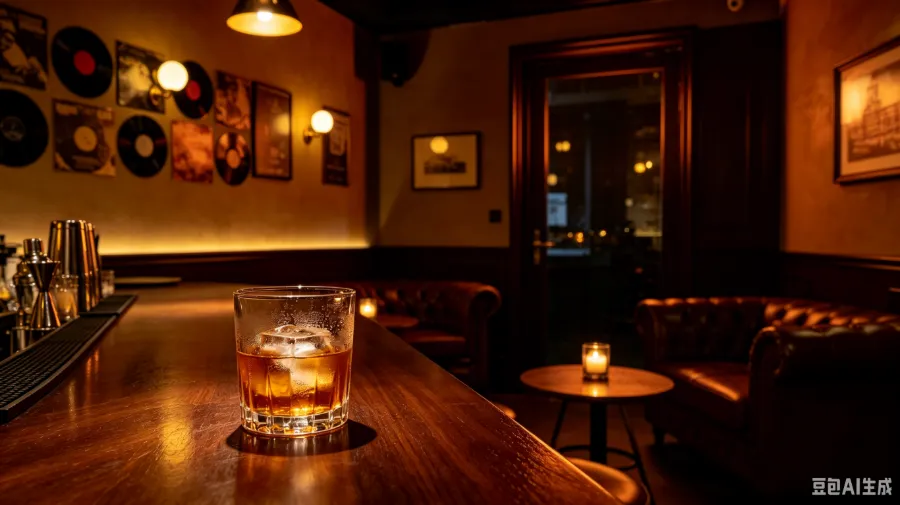
Quiet cafés are an exception. If the goal is a calm social vibe, avoid high‑saturation colors. The photo above shows a low‑saturation, soft‑light café where skin tones look good and the background doesn’t compete—perfect for dates or business meetings. Bars that install adjustable‑temperature ring arrays above the bar see a doubling (or more) of check‑in posts on Xiaohongshu.
But a word of caution: “materialized” lighting is not the same as turning the whole bar into a nightclub stage. I once tried a full‑roof projection laser matrix; patrons were intrigued for the first minute, then the intense light blinded them and they left early after paying. Lighting for phone cameras must strike a balance—enough to encourage a quick selfie, not so much that people want to flee after five minutes.
If you want a copy‑cat project, check out the NEBULA bar case with over 300 daily patrons and a real‑world light‑shadow matrix. Their lighting matrix was designed from day one as a “people‑photo‑lights” feedback loop. 900+ Bar Lighting Inspirations
FAQ
What color temperature should the bar counter lighting be in 2026?
There’s no single answer, but the rule is clear: work area 3000‑3500 K, patron area 2700‑3000 K. In dynamic sync scenarios, keep the warm‑white base with cool‑blue accents, limiting temperature swings to within 400 K. Bars that use a uniform temperature above 4000 K throughout the space are already struggling to retain repeat customers this year.
When retrofitting an old bar, where should I start?
Start with the point light sources and control circuits above the bar. Replace the main chandelier with grouped mini spotlights, add DALI dimmers and independent switches; a budget of ¥10‑20 k can upgrade the atmosphere by one level, and installation usually takes two days. If you have extra budget, add COB wall‑wash strips behind the front kickboard; turning off the ceiling lights and using only the wall wash at night creates a completely different vibe.
Are audio‑visual sync systems prone to failure? Is maintenance expensive?
The hardware itself is reliable; the weakest link is tuning. Sensitivity, sync range, and temperature‑mapping curves must be spot‑on, or you’ll crash. Allocate at least three days for on‑site tuning while music is playing; avoid remote “set‑and‑forget” sync. Ongoing maintenance mainly involves firmware updates and checking DMX cable connectors for oxidation—budget a few thousand yuan per year for a comprehensive check.
How do I balance the bartender’s work lighting with ambient lighting?
Physical separation is the best solution. Install a dedicated warm‑white work light for the bartender (≈3000 K, ≥500 lux) with a hidden switch under the bar. Ambient lights run on a separate automatic sync circuit. The bartender turns on the work light while mixing, then switches it off once the mood is set, leaving only the ambient lighting. Without physical separation, I’ve had to redo the setup multiple times—don’t skip this step.
Share Article