
How Smart Technology Quietly Transforms Your Frequent Nightclubs

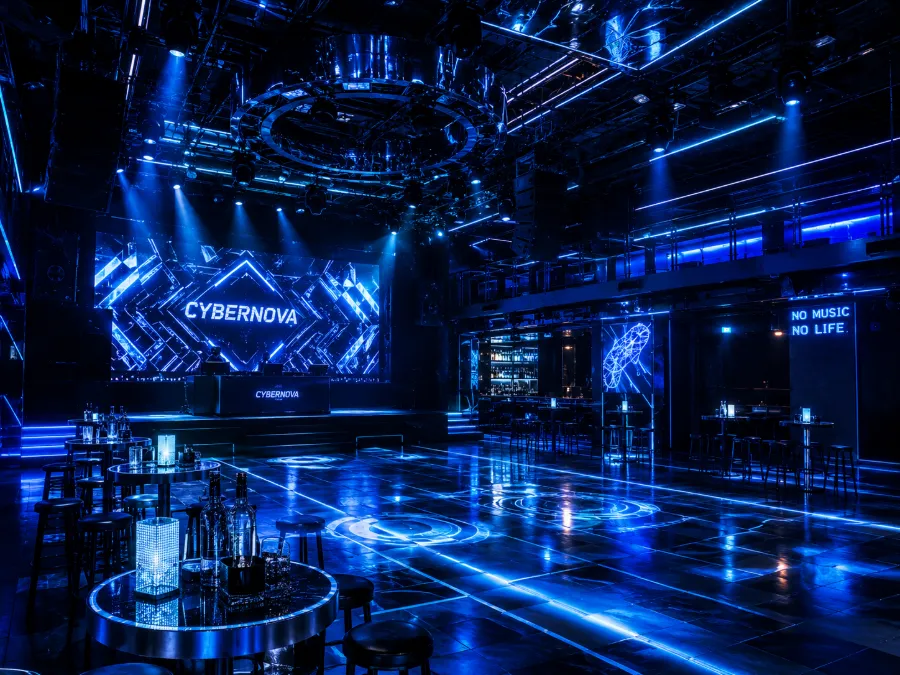
A while ago a friend took me to a brand‑new nightclub in Shenzhen. My first impression wasn’t the booming music or the pricey drinks – it was the ceiling lighting system that automatically changed color with the mood of the song. When the DJ played house, the whole room was a chilling blue; as soon as the beat intensified, it switched to a warm orange, and the strip lights in the booth area even seemed to breathe in time with the bass. I stared for a couple of seconds, then turned to my friend and asked, “Did the lighting designer have one too many drinks last night?” My friend rolled his eyes, “They’re using smart linkage, not a lighting designer.”
Alright, I admit that moment gave me the feeling that technology had left me behind. But after that night I spent a lot of time visiting various construction sites, trying to understand how these so‑called “smart” technologies actually get installed in a nightclub. I soon discovered a harsh truth: the gear looks flashy, but only a few places manage to implement it without a hitch.
Smart lighting linkage is now a standard feature in nightclubs; over 80 % of projects that opened in 2025 have this system. It relies on the DMX512 protocol and Art‑Net network, wiring fixtures, LED pixel strips, and video servers into a single central controller, which then syncs with the DJ booth’s timecode. In theory it’s precise, but I’ve seen a site where the owner tried to save money by having an electrician run the signal cables himself, resulting in the third set of lights flashing all night – looking like a dance floor but actually calling for help.
Fortunately, the industry’s discussion about bar lighting design is now quite mature, and many basic solutions can be directly referenced from established methods, so you don’t have to start from scratch each time.
If you want to learn the latest investment trends, read the Bar Investment Report 2026.
I’ve seen many owners spend hundreds of thousands on equipment, only to discover they can’t achieve the desired effect and then blame the supplier. The truth is that the problem often lies in the tuning stage – the automatically calibrated sound is frequently absorbed by wall materials.
For the latest data on renovation costs, see the analysis in Bar Renovation Bill 2026.
Automation Is Not the Same as Convenience – Pitfalls of Sound Tuning
Once the lighting is sorted, sound is the real headache.
Many proposals now run the EASE acoustic simulation software once and produce a few beautiful sound‑field distribution maps; clients sign off after seeing them. For more lighting design inspiration, check out the article Common Bar Lighting Techniques.
But when you actually hang the speakers and run a sound test – the low frequencies turn into a muddy buzz. In 2025, a nightclub in Nanshan, Shenzhen used Smaart for automatic acoustic calibration two weeks before opening. The system showed a flattened curve, yet the next day measurements revealed that the acoustic‑absorbing decorative panels on the walls ate up all mid‑high frequencies, while the low frequencies kept resonating in the corners. They had to tear down six decorative panels overnight, delaying the schedule by three days, and the owner almost got into a fight with the construction crew.
A complete sound‑light system’s self‑calibration takes about 2–3 hours, but manual fine‑tuning often adds another half‑day. Moreover, automatic calibration has a hidden pitfall – it measures reflections in an ideal state, but in real operation, when the crowd is dense, human bodies absorb sound very differently from an empty room. Many designers don’t mention this; I’ve seen the same issue repeat in many projects, including a VYLEN solution I worked on, where the equipment looked perfect on the drawings but the actual signal‑cable routing didn’t match the design.
Automation isn’t a shortcut; it just moves the pitfall from a visible spot to a hidden one. You need someone who understands what it’s doing to run those calibration curves correctly.
Virtual Preview – “Seeing” the Result Before Renovation
You might now be wondering: is there a way to spot these pitfalls before construction starts?
Yes, and the tools are getting more mature. Using lighting simulation software such as Depence² or Capture, you can run the entire nightclub’s lighting, video, and even fog effects on a computer. Dragging a light angle on the screen gives you a pre‑visualized live effect.
Last year I talked with a team that renovates bars; they used 3D previews to cut the average number of design revisions from five rounds down to two, saving almost two weeks of rework. One project was rejected three times during the CAD stage; they then created an animation in Depence² and sent it to the client, who approved it instantly. The cost of virtual testing isn’t high – just three extra days of modeling upfront, but the saved rework expenses are usually more than five times the modeling cost.
That said, a preview is still just a preview. The brightness data generated by the software can differ from the actual fixtures’ color temperature, occasionally resulting in a noticeable quality gap. I’ve seen a preview that looked high‑end with warm tones, but the final installation turned out cheap and KTV‑like. If you’re planning a renovation, read plenty of real‑world case studies first to reduce judgment errors and avoid paying unnecessary “tuition” fees.
Digital Operations – The Secret of Guest‑Flow Data and Lighting Interaction
Now comes the truly interesting part – smart lighting isn’t just pretty; it can also make money.
Some nightclubs already feed guest‑count counters and Wi‑Fi probe data into a smart central controller. The system automatically switches ambience modes based on real‑time occupancy: soft background light when the door first opens and few people, and high‑energy mode during the 1 am peak. Data show that venues using this time‑based automatic adjustment see an average 18 % increase in customer dwell time between 1 am and 2 am. An 18 % boost translates directly into higher beverage sales.
But every time I discuss this with an owner, I have to pour cold water on the idea. When a smart central controller project is delivered, I once saw a case where the lighting configuration changed three times – the first set during design, the second after the construction crew said the cables were too short, and the third when the owner chose a different batch of lights. The final installed equipment didn’t match the controller’s preset at all, essentially wasting the entire system’s cost.
These issues are not uncommon in the industry. In fact, many successful investment cases repeatedly confirm the same principle: buying the right hardware is only the first step; later tuning and aligning operational strategies are what truly create a competitive edge. If you want to know which spatial layouts best drive the venue’s atmosphere, check out the mainstream lighting layout schemes selected this year.
From a project perspective, a functional digital system’s core isn’t the price of the central controller, but the fact that every configuration change—from design through tuning to operation—has someone following up. Otherwise you’ve spent hundreds of thousands on an “automatic crash” feature.
FAQ
Q1: Are smart lighting systems expensive? Are they suitable for small nightclubs?
Entry‑level smart lighting linkage systems, including a central controller and basic fixtures, can be installed for about 30,000–50,000 CNY. Small nightclubs are advised to start with 2–3 DMX fixtures and a compact controller, keeping the budget under 80,000 CNY. The effect improvement will be far more noticeable than blindly stacking equipment.
Q2: Can an old nightclub be retrofitted with smart lighting linkage?
Yes, but you need to assess the existing wiring and fixture compatibility. Older venues often have non‑standard power‑cable routing, so signal cables must be re‑run, typically costing 20,000–40,000 CNY. If the existing fixtures don’t support DMX, they must be replaced entirely.
Q3: Is maintaining and updating the smart system a hassle?
It depends mainly on the controller brand. Mainstream systems usually push firmware updates quarterly, which can be applied remotely. The real hassle lies with the fixtures themselves – LED modules last about 20,000–30,000 hours. If you use pre‑made light strips, replacing a strip means re‑matching it to the controller, so it’s wise to have two spare sets installed during construction.
Q4: How do you solve the latency between lighting and music?
Latency typically comes from the audio signal being processed by a digital processor before reaching the controller. The solution is to have the lighting controller read the DJ booth’s timecode directly, rather than relying on microphone‑triggered audio. This keeps latency within 10–20 ms, which is imperceptible to the human eye.
Q5: Is there a system that can be operated without a professional lighting designer?
Yes. Most modern controllers include scene‑preset functions, allowing owners to store 5–8 fixed scenes such as “Opening,” “Peak,” and “Closing.” Switching scenes is then a one‑button operation. However, achieving truly real‑time music tracking still requires someone who understands signal flow to perform a full initial calibration.
Share Article