
The Future of Interactive Lighting Design: When Lights Learn to “Talk”

I recently spent an entire night at a friend’s bar, watching a strip of smart LED strips on the ceiling automatically change color and rhythm with the music and crowd density. To be honest, I felt a bit dazed at that moment—ten years ago we were still manually pushing lighting consoles, and now the lights have started to “think for themselves.” This article will discuss where interactive lighting design is headed and what these changes mean for professionals and venue operators.
Interactive lighting isn’t about making lights flashier; it’s about teaching lights to “see” and “hear.” When the on/off of lights no longer depends on manual triggers but is driven by real actions happening in the space—someone walks in, the lights warm up; the beat drops, the beams flash faster; an area empties, the brightness dims automatically—this experience is a completely different world from traditional preset scenes.
From “Preset Scenes” to “Real‑Time Response”: Light Is No Longer Just a Program
Traditional lighting design relies on preset scene switching, which is basically a bunch of DMX channel values played back by timecode or button order. When I first started, most of my work was fine‑tuning brightness curves on the console and praying that the live atmosphere matched the rehearsal. One DJ who broke the script could throw the whole rhythm into chaos.
Now things are different. Sensors—sound capture, infrared thermal detection, people counting—allow the lighting system to dynamically adjust based on live feedback. Last month I spent an evening at NEBULA bar in Nanshan, Shenzhen, and saw them using a single smart lighting system: at 8 p.m. when guests first arrived, the lights were in a warm welcome mode; at 9:30 p.m. as foot traffic increased, the color temperature automatically cooled and the light speed started to follow the music. No one touched a control panel at any point.
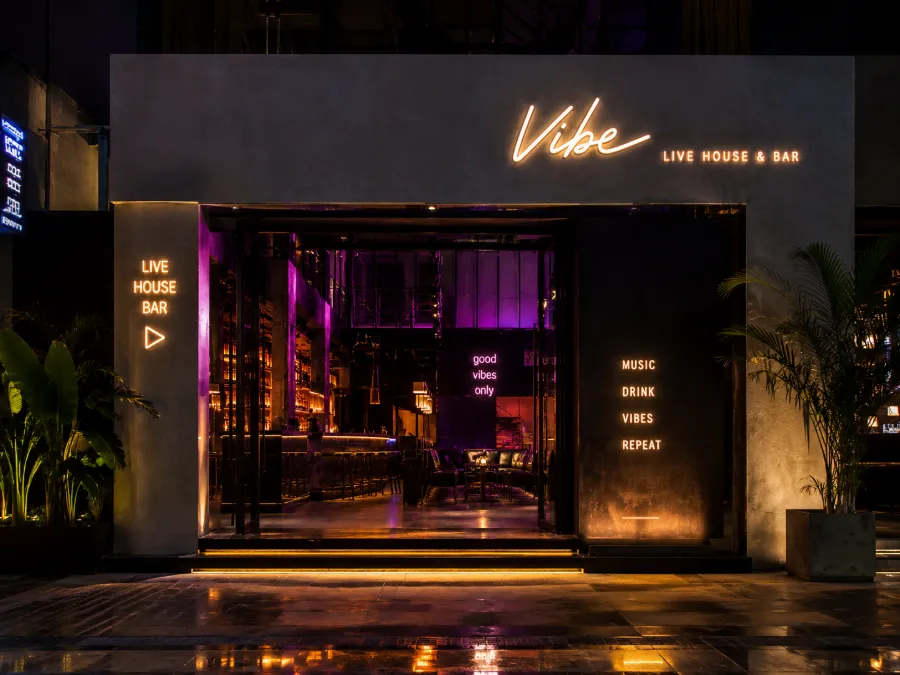
This shift dramatically changes the skill set required of designers. You are no longer just a DMX programmer—you must understand behavioral logic, sensor layout, and learn to use data to judge a space’s “emotional curve.” In other words, designers are turning from programmers into “experience architects.” NEBULA topped the local hot list in its first week, with an average daily footfall of over 300 people—something that can’t be explained by luck alone. For details on how they did it, check out the Shenzhen NEBULA bar light‑matrix case study, which breaks down their sensor placement and lighting strategy.
The “Love Triangle” of Light, Music, and Visuals: Synchronization Is No Longer Mystical
The video above shows the ceiling lighting effect in a KTV booth. You might think it’s just flashing to the beat. I thought the same at first, until I tried it and discovered that the real‑time interaction among light, music, and LED screens is far more complex than “matching a BPM.”
I call this a “love triangle”—light, sound, and image each have their own independent control protocols, and getting them to cooperate on the same timeline is the hardest part, not the response speed of any single device. Imagine the LED screen content is delayed by 200 ms while the lights have already switched to the next scene; you’ll clearly sense something is “off,” even if you can’t pinpoint why.
The technical challenges fall into three areas: latency control (all devices must run on the same timeline), color consistency (the color temperature of the LED screen and lighting fixtures is hard to unify), and protocol bridging (Art‑Net, sACN, DMX, plus the LED screen’s DVI signal—cross‑protocol synchronization is a nightmare).
Projects that miss the mark look like lights dancing on their own, with the visuals and music out of sync. Successful ones—like the flagship Sing Enjoy KTV store, where all 36 booths are equipped with an intelligent lighting‑interaction system that switches scenes with a single button—deliver a fully immersive guest experience and boost repeat visits by 40%. I used to synchronize everything with a stopwatch; now the system aligns itself.
The “Dark Side” of Interactive Lighting Design: Why Many Projects Fail
Interactive lighting sounds cool, but I’ve seen many projects flop. In the fall of 2025, a community bar in Nanshan, Shenzhen, planned a full interactive lighting system—sound response, infrared sensing, automatic scene switching—but problems emerged one after another once construction began.
The most fatal issue was wiring cost. Renovating an old venue means limited conduit space in ceilings and walls, while an interactive system needs twice as many control, power, and signal cables as traditional lighting. The renovation crew discovered the existing raceways were insufficient; they either had to break walls to reroute cables or expose them openly. The owner chose the latter, which compromised the visual aesthetic. Additionally, sensor placement points didn’t match the renovation drawings, so the lighting team and construction crew only met on site for the first time—design and construction were out of sync, a problem I’ve seen countless times.
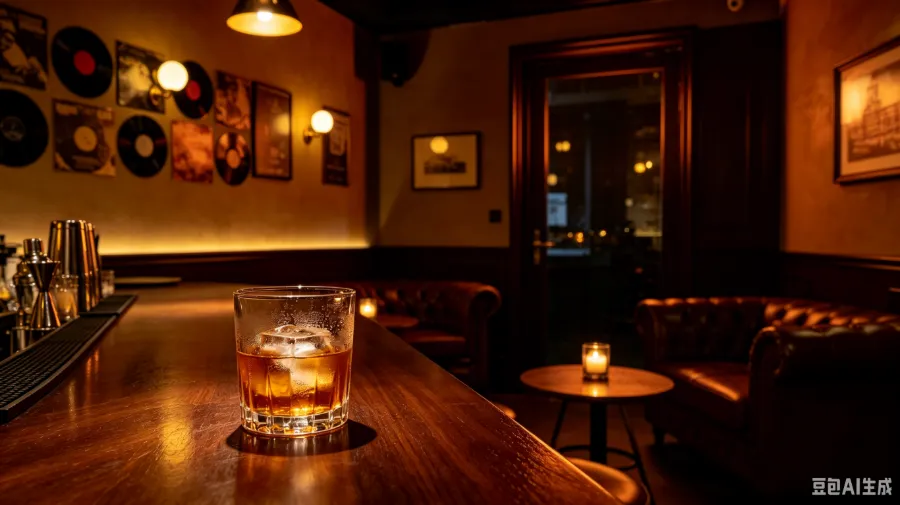
In the end, the interactive lighting budget was slashed by 60%, and the originally planned whole‑venue smart interaction was reduced to a few preset scenes for the bar counter area. The owner later told me, “Interaction isn’t the goal; atmosphere is.” I felt a pang of disappointment—not because the technology failed, but because “interaction” was never treated as a system‑level problem from the start.
Later we tried VYLEN’s one‑stop delivery model and realized the issue stemmed from the design‑construction gap. Lighting design and renovation drawings should be a single document, not two separate sets that have to be merged on site. Many bar owners think interactive lighting is too far removed from them—indeed, if you just want a quiet drinking spot, traditional design concepts are sufficient. Interaction isn’t a cure‑all; don’t chase “smart” for its own sake.
The Next Five Years: Lighting Design Will Become a “Spatial Operating System”
I suspect the changes in the next five years won’t be slower than those of the past decade. A clear trend is that lighting control is being integrated into larger spatial management platforms—not just adjusting brightness and color temperature, but sharing logic with HVAC, audio, access control, and even foot‑traffic analytics.
While reading the 2026 Nightclub & KTV Lighting Design Trends, I noticed the industry is already talking about a “spatial operating system”—lighting is no longer a standalone installation but a “effect layer” within the whole space system. The scenes you set today can be changed three months later without rewiring; OTA upgrades handle it. By 2028, more than 40 % of new commercial entertainment spaces are expected to use remotely upgradable lighting control systems.
This is both an opportunity and a challenge for designers. You don’t need to become a network engineer, but you must understand layered architecture, data interfaces, and the user‑experience feedback loop. Companies like VYLEN, which handle everything from design to opening, essentially leave interfaces for future system iterations. It’s no longer about selling a lighting package; it’s about ensuring you can seamlessly upgrade three years from now.
For investors, choosing a scalable system matters far more than chasing the latest visual effect. Spending an extra 20 % of the budget on system architecture today could save a full renovation cost two to three years later.
FAQ
Is interactive lighting much more expensive than traditional lighting?
Not necessarily. Adding a few sensors and upgrading the central controller usually increases the overall budget by 15 %–30 %. The real cost drivers are wiring upgrades and post‑installation tuning, especially in older venues. Plan the interactive system’s wiring during the renovation phase.
Are small boutique bars suitable for interactive lighting?
Small bars are better suited for “light interaction”—using one or two sensors for localized responses, such as bar‑counter lights reacting to bartender movements or entrance welcome effects. Full‑venue smart interaction offers low ROI for spaces under 100 m².
Is maintaining an interactive lighting system a hassle?
It depends on how closed the system is. Proprietary‑protocol devices require factory‑only service, making lead times and costs unpredictable. Systems built on open protocols (DMX/Art‑Net) and standardized sensors have maintenance costs comparable to traditional lighting.
Do I need to know programming to work with interactive lighting?
You don’t have to write code, but you need to understand the concept of a “logic chain.” Modern control consoles use drag‑and‑drop programming interfaces, so a designer can get up to speed in half a day. The real hurdle is understanding spatial behavior—not technology, but insight.
Will interactive lighting make guests feel it’s too “showy” and hurt the atmosphere?
Yes, that’s the most common reason projects fail. Good interactive lighting makes guests feel the atmosphere is right without them realizing the lights are changing. If the lighting causes guests to pull out their phones instead of relaxing with a drink, it’s overdone.
Share Article