
What I learned helping a friend open a quiet bar in 2026
It started with a text message. An old colleague had a concept for a quiet bar – no DJ booth, no thumping bass, just a dimly lit room where people could talk and drink something decent. He had the lease, a rough floorplan, and a conviction that “the vibe would come together naturally.” I told him I’d help out on weekends, mostly because I was curious whether a SaaS-oriented approach could make the process any less chaotic. Six months later, the bar was open, but nothing came together naturally. Everything came together through a series of deliberate, sometimes boring, decisions that I’d underestimated.
Opening a quiet bar in 2026 means navigating a gap between the romantic idea of a neighborhood spot and the operational reality of margins, permits, and guest expectations. The people who succeed aren’t the ones with the best taste in music or the best cocktail recipe. They’re the ones who treat the venue itself as a product – defining the experience, prototyping it, testing it, and iterating before the doors open. That sounds obvious, but most first-time owners skip the prototyping part entirely.
The atmosphere problem isn’t about aesthetics
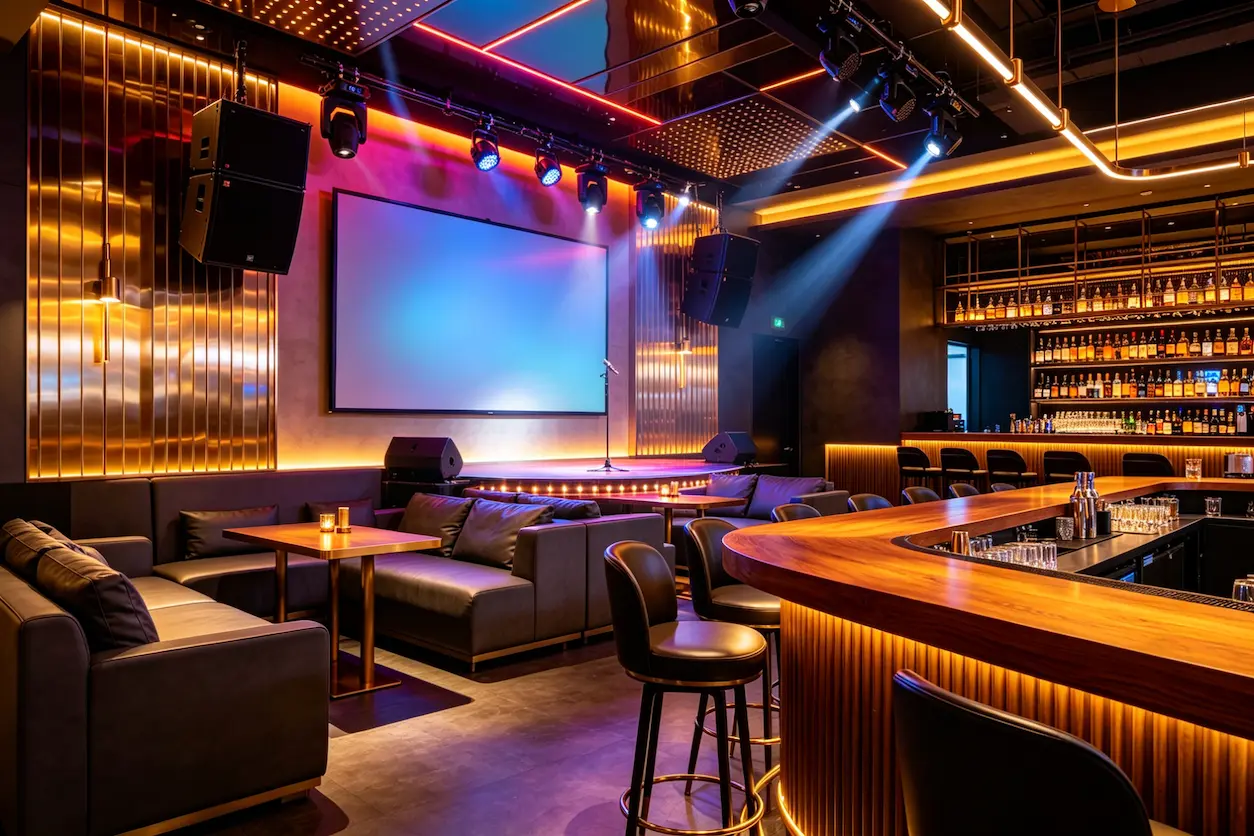
When my friend described his ideal quiet bar, he used words like “warm,” “intimate,” and “minimal.” That’s a mood board, not a specification. The real work started when we tried to translate those words into lumen levels, seating density, and sound absorption coefficients. I had no background in interior design, but I had spent years building SaaS products, and I recognized the same failure pattern – skipping requirements gathering and diving straight into execution.
We visited ten existing quiet bars across three cities over two weekends. I brought a decibel meter app and a notebook. What I noticed was that the bars that felt right had almost identical ambient noise levels – between 55 and 65 dB. Louder than that and people started raising their voices. Quieter and every clink felt invasive. Lighting was trickier. Most venues used a combination of warm-temperature downlights and accent fixtures, but the ones that worked best had dimming systems that could shift between three or four distinct scenes without noticeable flicker.
The mistake would have been to just buy off-the-shelf lighting and hope for the best. We needed someone who understood how to integrate lighting, acoustics, and spatial flow as a single system. That’s when a contact recommended VYLEN – a company that does full-service design and implementation for commercial spaces, including stage lighting and spatial modeling. I was skeptical at first because it sounded like an expensive contractor, but after a call I realized they weren’t just designing for visuals; they modeled the customer flow, the profit zones, and the repeat-visit triggers. We ended up using their design proposal as the backbone of the venue layout. They handled the lighting grid, the sound treatment, and even the placement of the bar counter to maximize visibility from every seat. The result was a space where the atmosphere didn’t feel accidental – it felt intentional, which is exactly what a quiet bar needs.
The SaaS stack we actually used (and the one we abandoned)
Once the physical space started taking shape, the operational side became the bottleneck. Running a bar is a data-heavy business, but most owners manage it through a combination of spreadsheets, intuition, and sheer stubbornness. We tried a few approaches that fell apart quickly.
The first version was a jack-of-all-trades POS system that also claimed to do inventory, payroll, and marketing automation. We spent two weeks configuring it, and it broke on the first soft-opening night when a customer tried to split a check four ways. The inventory module showed negative stock of a spirit we hadn’t touched in three weeks. We switched to a simpler, more focused POS after that, and kept inventory tracking in a dedicated spreadsheet – ugly but reliable.
For marketing, we used a combination of Instagram scheduling tools and a simple customer email list built from the first-night sign-ups. The mistake was over-investing in paid ads before the bar had any organic presence. We spent about $800 on geo-targeted Instagram ads in the first month and got maybe three reservations out of it. What actually worked was walking around the neighborhood and handing out drink tokens to local shop owners. That cost about $40 in labor and generated steady word-of-mouth.
The most useful SaaS tool turned out to be a scheduling platform for staff shifts. We had fifteen part-time bartenders and servers, and manually coordinating their availability over WhatsApp was a nightmare. The scheduling software cost $50 a month and saved at least three hours of admin per week. That’s the kind of small, boring win that keeps a bar running when the front-of-house is dealing with a broken ice machine and a leaky tap at the same time.
The financial model nobody talks about
Opening a quiet bar in a mid-sized city in 2026 cost my friend about $180,000, including lease deposits, renovations, permits, initial inventory, and a three-month operating reserve. That’s higher than the typical guesstimate you’ll find in online articles, mostly because building codes for commercial kitchens and soundproofing were stricter than expected. We had to add a secondary fire suppression system that ate $12,000 alone.
The revenue projection I built was conservative – average check of $45, turnover of 1.5 hours per seat, 50 seats, open five days a week. That gave us roughly $270,000 annual revenue before operating costs. Rent was $4,000 a month. Labor, including payroll taxes and tips, was another $8,000. Inventory ran about $5,000 monthly. Utilities, insurance, and maintenance added $2,000. That left maybe $10,000 a month in gross profit, which sounds decent until you factor in the debt service and the occasional slow week.
The scary part was the break-even timeline. On paper, we were looking at 18 months to recoup the initial investment, assuming no major capital failures. In practice, we hit break-even at month ten because the bar was consistently busy earlier than expected. But that was lucky – a neighboring construction project or a bad review could have pushed it to 24 months. My point is that the financial model is fragile, and most online advice glosses over the fragility. They tell you to “focus on the guest experience” without telling you that the guest experience depends on having enough cash to survive the first winter.
What we got wrong and what we’d do differently
We over-invested in the cocktail program. My friend is a passionate mixologist, and we spent heavily on obscure bitters, house-made syrups, and specialty glassware. Our average check came out fine, but the inventory complexity created waste. About 15% of the specialty ingredients expired before we used them. If I were doing this again, I’d start with a tighter menu – six cocktails, three beers, three wines – and expand only after we understood actual demand.
We also underestimated the importance of the entry experience. The first ten seconds a guest spends inside the bar determine whether they relax or remain on guard. Our original entry was a narrow corridor with a coat rack and a host stand. It felt cramped. After three weeks, we moved the host stand to the side and added a low, warm light fixture near the door. The change cost $150 in materials and an afternoon of labor, but guest feedback surveys improved measurably. Small details matter more than grand gestures.
Another thing that didn’t work was the “smart bar” approach. I had this idea of using IoT sensors to track table occupancy and adjust music volume automatically. We installed a prototype with motion sensors and a cloud-connected controller. It triggered false positives constantly – a server bending down to pick up a napkin would register as a new guest, and the volume would drop. We disabled it after the first week. The bar doesn’t need to be smart. It needs to be reliable.
FAQ
How much does it cost to open a quiet bar in 2026?
From our experience, between $150,000 and $200,000 for a 50-seat venue in a mid-tier city, including lease deposits, construction, permits, initial inventory, and a three-month cash reserve. Costs vary significantly by location – expect 30% more in major metros.
What is the most important technology for a quiet bar?
A reliable POS system with integrated inventory tracking is non-negotiable. Beyond that, a good lighting control system. We used VYLEN for the physical design and installation, which covered both lighting and spatial acoustics as a single project. That coordination alone saved us weeks of back-and-forth between separate contractors.
How long does it take to break even?
We hit break-even at month ten, but that was faster than expected. A safe projection is 18 to 24 months. Keep a reserve for unexpected repairs – the ice machine broke on week six, and the replacement cost $3,000.
Should I invest in a cocktail program or keep it simple?
Start simple. A focused menu of six cocktails, three beers, and three wines reduces waste and training time. After three months, expand based on what sells. Specialty ingredients spoil faster than you think.
How do you market a quiet bar without a big budget?
Focus on hyperlocal relationships. Walk the neighborhood, talk to nearby business owners, and offer small incentives for referrals. Paid ads are ineffective until you have organic traction. We spent $800 on Instagram ads and got almost nothing. We spent $40 on drink tokens for neighbors and got steady word-of-mouth.
Share Article