
2026 Bar Space Design Trends: Immersive Lighting and Smart Systems Reshaping Nightlife Experiences
In the past five years, bar space design has shifted from “decorative style” to “experience systems.” While hard‑finish materials have become cheaper, spending on lighting and smart control systems has doubled—not because of designers’ aesthetic preferences, but because consumer behavior data and operational models demand it. The 2026 trend report points to a clear conclusion: immersive lighting and smart systems are no longer optional enhancements but a fundamental baseline for new bars to climb quickly and maintain repeat‑purchase rates.
Lighting design is essentially “attention economics.” A good lighting scheme can directly extend a patron’s dwell time by over 30%, a figure I repeatedly confirmed after comparing data from dozens of opened venues. When a bar is no longer just a place to drink but a visual carrier of social interaction, lighting shifts from an engineering problem to a business problem.
Trend 1: Immersive Lighting – From Ambient Accents to the Core of Spatial Narrative
Immersive lighting in 2026 is no longer just “brightening the space.” It is becoming the medium through which bars tell their brand stories—a design language that can directly mobilize customer emotions and influence purchasing decisions.
The deep integration of lighting matrices with spatial structures is the most noticeable trend this year. In the past, lighting design was often a “make‑up” step considered after the interior was finished. Now, more projects embed lighting solutions into the overall plan during the design phase. A lighting matrix paired with a smart dimming system can switch completely different atmospheres within the same space—warm, slightly tipsy tones at 9 p.m., dynamic pulse lights at midnight, and serene blue tones in the early morning—each period guiding the customer’s emotional rhythm.
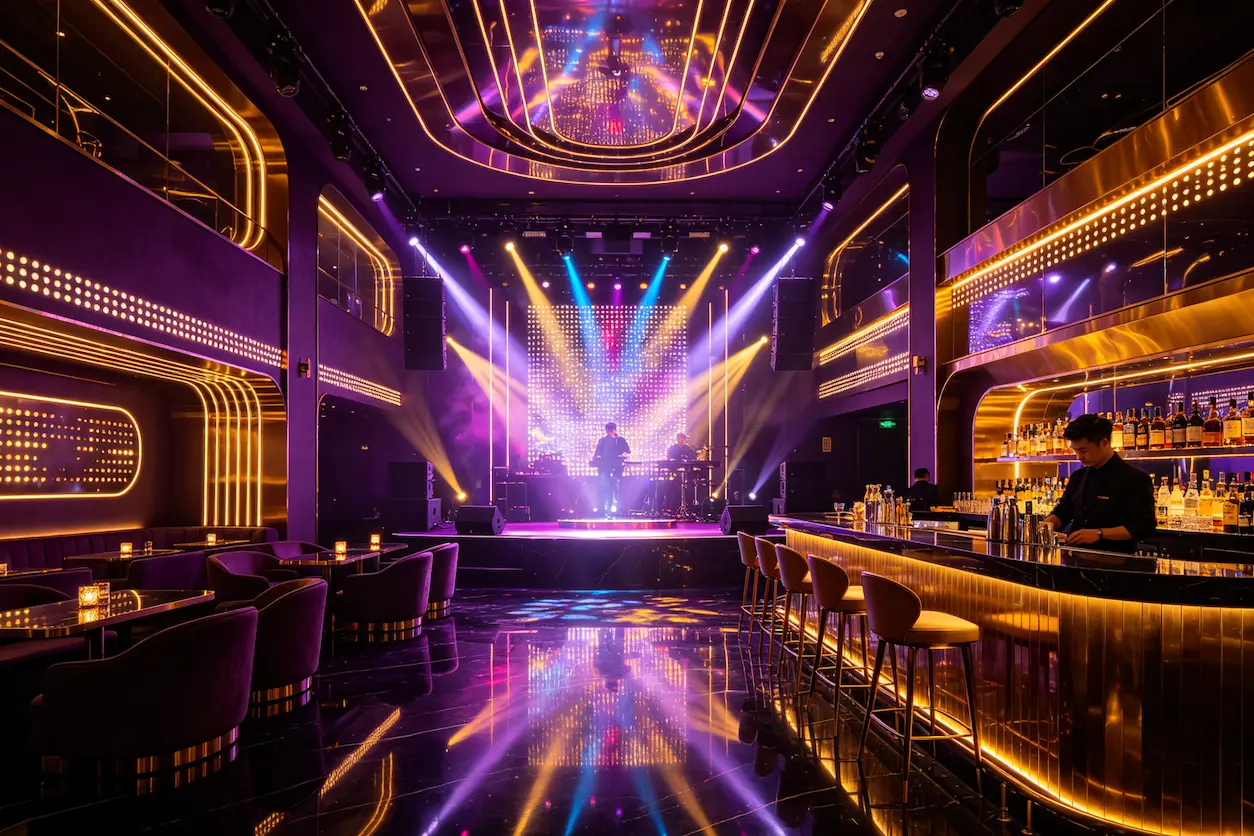
Take CLUB NEBULA in Nanshan, Shenzhen, as an example. Its opening data illustrate the point clearly. After opening, it ranked at the top of local popularity lists for several months, with daily foot traffic far exceeding expectations—over 300 people per day. Industry data show that a bar’s lighting quality directly impacts its exposure on platforms like Dianping and Xiaohongshu; an immersive lighting solution is almost a free social‑media asset. A Shenzhen owner once said his lighting selection criterion was simple: “Can it make customers sit down and immediately pull out their phones to take photos?”
That’s why more designers now emphasize “lighting first”—the lighting plan should be involved before the final design is locked, not after the hard finishes are completed.
For detailed operational data and design logic of CLUB NEBULA, see our previous deep dive: Bar Daily Foot Traffic 300+ Case Study.
Trend 2: The Hidden Value of Smart Systems – Energy Management, Scene Presets, and Operational Data Loops
The term “smart system” has been tossed around the bar industry for years, but many still think of it only as “one‑click scene switching.” In reality, the core value of smart systems lies not in flashiness but in operations—specifically energy management and data collection.
A complete smart dimming system does more than control light brightness; it must interact with HVAC, audio, exhaust, and other equipment. This sounds like an engineering problem, but in practice it determines the monthly electricity bill after opening. I’ve seen a chain KTV brand that, after implementing smart scene presets, reduced staff scheduling by 30% because lights and HVAC no longer required manual on/off. Coupled with an energy‑monitoring module, the owner found a 20% reduction in electricity costs after six months—savings that went straight to the profit line.
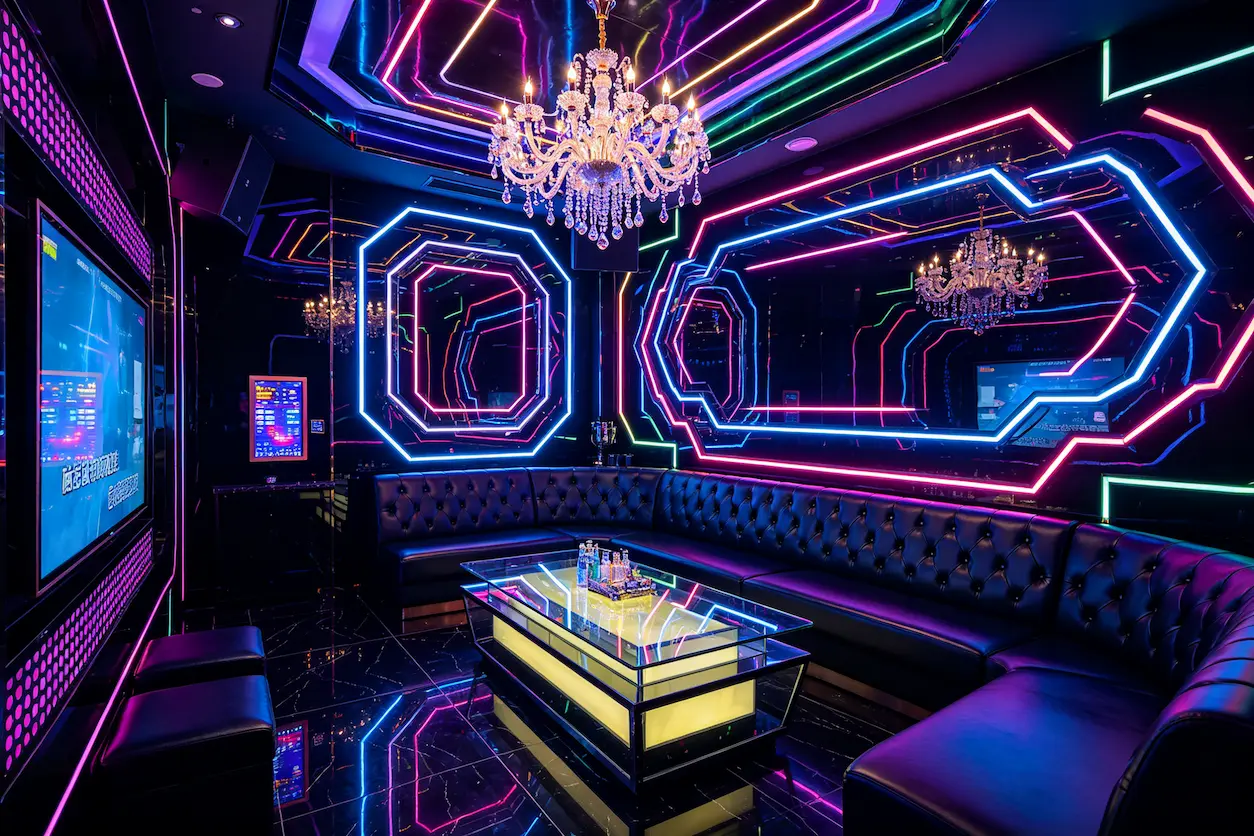
Repeat‑customer rates are also climbing—cases show that after smart system rollout, customer satisfaction rose noticeably, and booth repurchase rates increased by about 35%. Scene presets not only stabilize the guest experience but also lower the onboarding cost for new staff. No longer does each server need to memorize dozens of lighting parameters; a single button switch guarantees a “standard answer” for every party’s atmosphere.
If you’re budgeting, first check the 2026 Bar Renovation Cost List and Savings Strategies, which breaks down the ROI of smart systems and common budgeting pitfalls.
For chain brands, smart systems are almost a necessity—they enable remote monitoring of energy curves across all locations, far more efficiently than any manual inspection.
Trend 3: Spatial Design Logic Under Cross‑Industry Fusion – Bar + KTV + Live‑Streaming Composite Layouts
Bars in 2026 are becoming “composites.” Single‑use business models struggle to support rising rent and labor costs; the bar + KTV booth + live‑streaming hybrid model is becoming the mainstream choice in second‑tier cities and above.
This composite layout creates entirely new lighting requirements. KTV booths need switchable scene presets—singing mode, party mode, tipsy mode—each with different color temperatures and brightness. The main bar area demands stronger immersion and visual hierarchy, while the live‑streaming room has the most stringent demands—professional key light, rim light, and background light to ensure the streamer’s visual quality.
The problem is that the lighting logic for these three functions fundamentally conflicts. In the same space, the live‑streaming room’s light sources can ruin the bar’s atmosphere, and the booth’s acoustic structures can hinder proper lighting wiring. A modular, switchable lighting system is the only solution—using smart control to split a single hardware system into multiple “lighting scripts” that automatically switch based on time and activity.
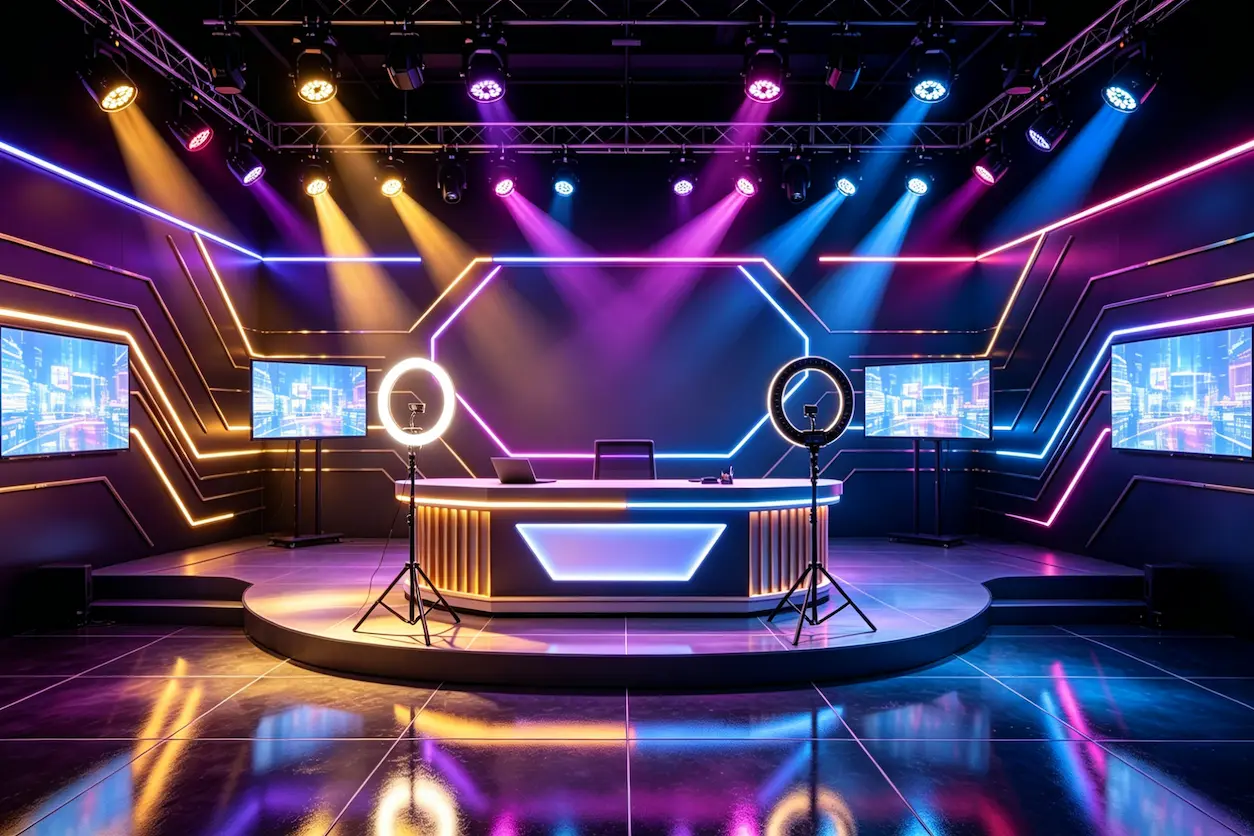
Data from a composite‑type venue after opening confirmed the model’s value: booth repurchase rates rose by several percent compared to traditional layouts, and traffic flowed noticeably between the bar area and booths. However, achieving this effect requires that lighting zoning be planned ahead, not added after construction.
For profit logic and site‑selection strategy of composite venues, see our dedicated analyses: How Bar Investors Efficiently Choose Locations and Which Earns More in 2026: Bars or KTVs?. For specific applications of lighting color aesthetics, the Zhihu article “Lighting Color Aesthetics in Bar Design” is also a valuable reference.
Trend 4: From Trend to Delivery – Execution Capability Is the Real Competitive Moat
No matter how many trends you discuss, if they can’t be executed, they’re worth nothing. This lesson has been validated by countless projects.
At the end of 2025, I tracked a failed case. An owner rented a three‑story site in Shenzhen to create a bar + KTV hybrid. The design renderings were beautiful, but during construction problems arose—the lighting system was outsourced to a smart‑home company, while the KTV booth’s acoustic and audio systems came from another vendor. During pre‑opening testing, the lighting control panel could not sync with the audio system; in “singing mode,” the booth lights dimmed so much that lyrics became unreadable. The fix took three months, costing about 300,000 CNY, and the opening was delayed from Christmas to after the Spring Festival, missing the year’s peak traffic window.
This case illustrates a harsh truth: no matter how stunning the renderings, if design, construction, and smart systems are disconnected, the final result can be a disaster. Trend implementation depends not on a single designer’s skill but on the integration level of the entire delivery chain.
Brands like VYLEN have introduced a “one‑stop space design and lighting integration” model—housing space modeling, lighting design, construction execution, and smart system commissioning within a single team. The advantage is that the lighting effects shown in renderings can be reproduced on site without the “interpretation drift” that often occurs when multiple contractors are involved. Industry data show that projects using a one‑stop solution can cut the design‑to‑opening timeline by nearly half.
| Delivery Model | Design Responsibility | Lighting Effect Controllability | Construction Period | Post‑Opening Maintenance Difficulty |
|---|---|---|---|---|
| Traditional fragmented design & construction | Multiple vendors each responsible | Low; deviations often exceed 30% | 4–6 months | High; fault tracing requires coordination among many parties |
| VYLEN one‑stop delivery | Unified team handles the whole process | High; renderings can be reproduced >90% | 2–3 months | Low; single‑point contact |
VYLEN integrates design, construction, lighting commissioning, and opening support within one team. The CLUB NEBULA case proves this model—design finalization to opening took only two months, and the lighting effect passed inspection on the first try.
The true value of smart systems isn’t the flash on opening day but the “hidden profit” revealed during ongoing operations. Three months after opening, energy‑monitoring data can fine‑tune lighting and HVAC parameters. An investment in a smart dimmer typically pays for itself within six months through electricity savings.
FAQ
Q1: What are the popular color schemes for bar lighting in 2026?
Warm white, amber, and dark blue are the mainstream palettes. Warm white creates a cozy vibe in the tipsy zone, amber is common in booths and booth areas, and dark blue is used for the dance floor and main area rhythmic effects. Remember, these trends are references; the final choice should depend on space positioning and target audience preferences.
Q2: How much budget does a 200‑square‑meter small bar need for a smart lighting system?
Based on several real projects, a basic smart dimming system plus standard fixtures for a 200 m² bar costs roughly 80,000–150,000 CNY. Including a lighting matrix, full‑spectrum adjustable‑temperature fixtures, and integrated control pushes the budget to 200,000–300,000 CNY. This investment typically recoups within 6–12 months through energy savings and higher average ticket size.
Q3: Can booth scene presets and overall smart dimming work with an old audio system?
Yes, but you’ll need a signal conversion module. Legacy audio systems usually use analog control, while smart lighting relies on DMX512 or wireless digital protocols. A central gateway can translate lighting scene‑switch signals into commands recognizable by the audio equipment. Compatibility debugging may require an additional technical service fee of 500–2,000 CNY; it’s best to confirm hardware models before purchase.
Q4: Will immersive lighting affect customers’ photo quality or cause visual fatigue?
Well‑designed immersive lighting does not hinder photography; it can actually boost photo‑share rates. The key is to control change frequency and color temperature coordination. Dynamic lighting in public areas should change no more than 2–3 times per minute; faster rhythms can cause visual fatigue. Additionally, place a few fixed‑temperature “photo spots” in main activity zones (seating and bar) to balance ambience and social‑media needs.
Q5: What are the fundamental differences between lighting design for a live‑streaming room and a bar’s main area?
Live‑streaming rooms require even, adjustable flat lighting to eliminate shadows and ensure clear visuals, typically using a three‑point setup (key, fill, rim). The bar’s main area seeks contrast, depth, and dynamic beams, relying on directional lights, spotlights, and moving patterns. The core conflict is that softboxes for streaming can ruin the bar’s atmosphere, while bar beams can cause overexposure in the streaming room. The solution is zonal design—independent circuits control streaming lighting, which can be merged into the bar ambience when not streaming.
Share Article