
How Professional Design Boosts Customer Satisfaction from 60 to 98 Points?

My first experience with bar lighting was in 2019 when a friend opened a small bar and asked me to help install the lights. I went to the lighting market, bought a couple dozen downlights and a few strips of LED tape, and finished the installation in one day. At the time I felt pretty satisfied—it was bright enough. A few days after opening, my friend called to say a girl left after less than twenty minutes because “the light above my head reflected off my hairline.” I was stunned. I had always thought lighting was a purely physical issue, but after that incident I realized it’s also a psychological, physiological, and visual comfort issue. Today I’m not going to discuss “light and shadow philosophy”; I’ll just talk about the pitfalls I’ve fallen into and the lessons I’ve learned, and explain why professional design can raise customer satisfaction from a passing grade to a 98‑point level.
The biggest difference between professional lighting design and ordinary light installation isn’t price; it’s whether a customer, within the first thirty seconds of stepping into your store, decides to pull out their phone for a selfie or silently scroll their screen. That thirty‑second intuitive judgment determines whether they’ll return, post on social media, or bring friends. It’s not a matter of aesthetics; it’s a matter of commercial return.
Lighting Is Not “Bright”; It Is “Atmosphere” That Persuades Customers to Order
My first mistake was assuming that brighter is better. Later I visited the flagship store of Sing Enjoy KTV and looked at their private room designs, and when I got back I replaced all of my own downlights.
Professional lighting design doesn’t focus on “is it bright enough,” but on how three parameters work together: color temperature, color rendering index (CRI), and illuminance distribution. Ordinary people judge “the lighting is good” with their eyes, but they’re actually evaluating these factors subconsciously. A light with CRI 90+ versus CRI 70 on the same person’s face shows a noticeable difference— the former makes skin look natural and translucent, the latter adds a yellow or blue cast. Many people say “the atmosphere here is good,” which really means the lighting makes skin tones and spatial textures feel comfortable.
Color temperature is even more critical. In bar/KTV settings, moving from 3000 K to above 4000 K causes a sharp drop in visual comfort. Warm lighting relaxes people and encourages interaction, while cool white light makes every pore visible, making it hard to stay seated. When I opened my first shop, I set all lights to 4000 K—“as long as it’s bright.” As a result, customers rarely stayed more than an hour in a private room, and beverage sales were absurdly low.
Later I consulted the article Nine Key Rules and Cases for Bar Space Design and extracted several key points: lighting must be zoned and scene‑specific. The illumination intensity in the booth area should be noticeably lower than in the aisle; the stage area should be a highlight but not glaring; the restroom should use higher‑CRI lights because it’s where customers check themselves. These seem like minor details, but in practice each one affects reputation.
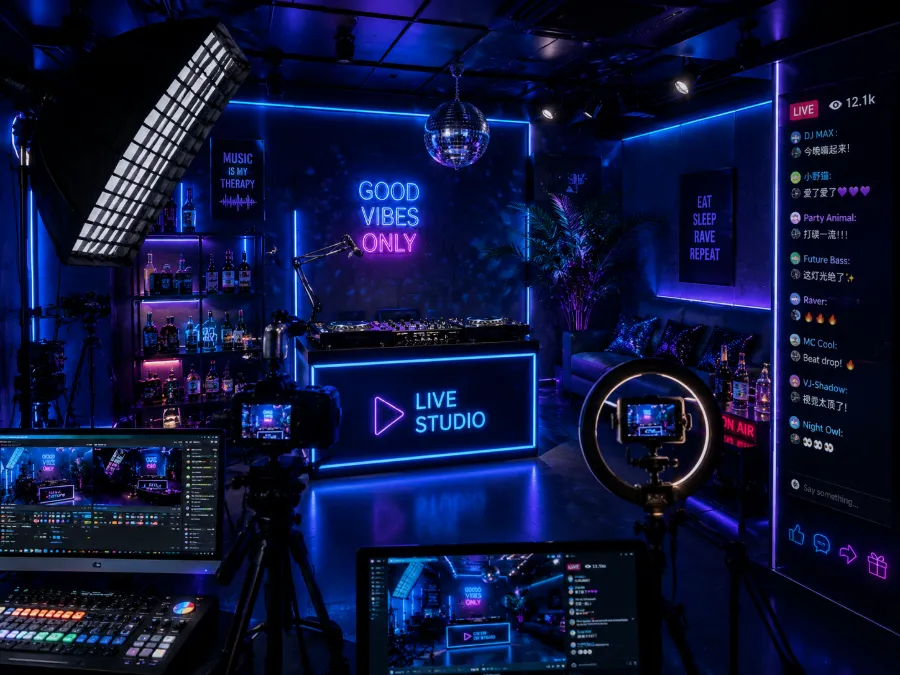
Sing Enjoy’s flagship store installed a smart dimming system in all 36 private rooms, enabling one‑click scene switching. Their results look impressive: 98 % customer satisfaction and a 40 % increase in repeat purchases. The numbers aren’t mysterious—when the lighting is right, people stay, come back, and bring others. Those three factors drive the 40 % uplift.
How Professional Design Trades “Hidden Costs” for “Explicit Satisfaction”
In 2024 I made a decision that now looks very foolish. An old friend was opening a small bar and I reviewed his design plan. The quote included a professional lighting design budget of 30,000 CNY. He said it was too expensive and asked if we could cut it—“I’ll buy the lights myself and just adjust them on site.” I hesitated, then agreed.
The next day, three tables of customers complained that the light made their faces look yellow, like an old filter. The women’s group even complained, “selfies are impossible.” By the third week, repeat customers were under 10 %. When I visited the site, I found several issues: the ordinary fixtures had no anti‑glare treatment, so people sitting directly opposite the bar were hit by the downlights; there was no acoustic or lighting layering between zones, making the whole space as bright as a big mall.
We later added a professional design, costing 50,000 CNY. Because the wiring was already in place and many partitions and ceilings were finished, adding a smart central control system required tearing down walls and re‑wiring, making the secondary construction cost far higher than the first. In total, we saved 30,000 CNY but spent 50,000 CNY on the fix, plus two weeks of vacancy. The rent, labor, utilities, and lost customer loyalty added up to over 80,000 CNY in losses.
This taught me that in bar renovation, the bandwidth between cost and decision‑making is very narrow. The article Bar Renovation Costs Changed but Pitfalls Remain calculates the numbers clearly: although renovation costs fell about 15 % from the 2022 peak, a missing design phase can double the cost of rework. That friend’s “save 30,000 CNY, lose 80,000 CNY” is a textbook cautionary tale.
True professional design spreads hidden costs into the front end—space modeling, pre‑layout of light positions, smart integration plans—so that problems are solved before the building is topped out. Spending three extra days on simulation during design saves thirty complaints after opening.
Professional Lighting Is a “Free Advertising Board with Built‑In Traffic”
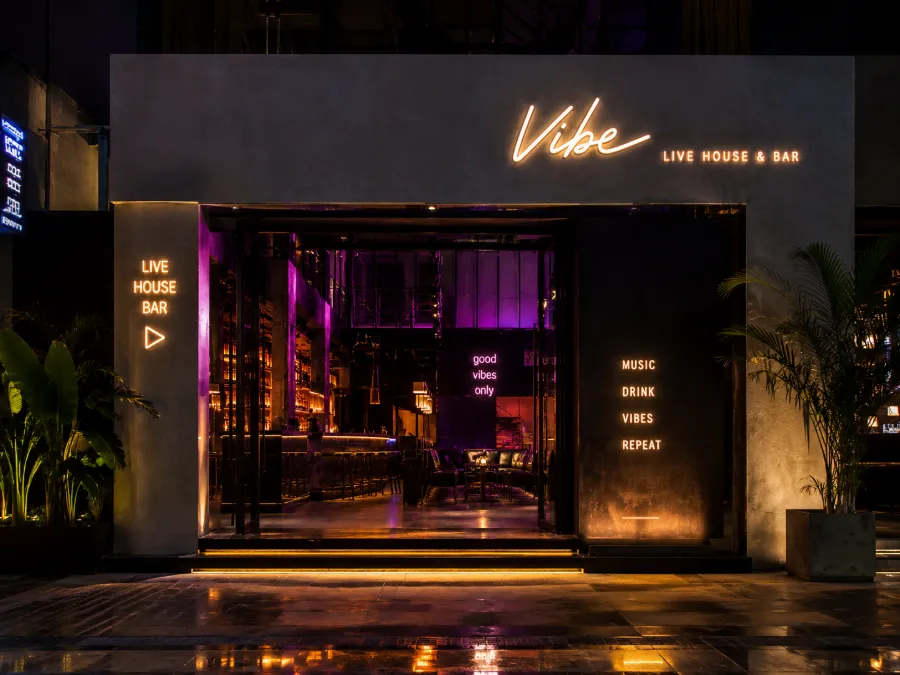
Alley Quiet Bar has consistently ranked among the top three in its area and enjoys over 70 % repeat customers. What did they do right? Simple: the lighting makes every corner photogenic. This isn’t mysticism; it’s intentional design.
I noticed an interesting phenomenon: many owners think customer satisfaction comes from service attitude. In bar/KTV entertainment settings, the lighting impression in the first thirty seconds determines roughly 70 % of the repeat‑purchase probability. Customers may not be able to articulate it—“this place feels good,” “the lighting is comfortable”—but the core need is “make my face look good,” a demand many are shy to voice. When the lighting is right, customers open their front‑facing cameras without frowning, giving you free promotion.
Conversely, if the lighting is wrong, customers leave silently—no complaints, no reviews, no explanations. The operations dashboard shows a dip in seat‑occupancy for a certain period, but the cause is hidden. The real reason is that a corner’s light makes faces look gray, so traffic naturally drops.
That’s why I increasingly value “previewable, replicable” design systems. Traditional lighting outsourcing only reveals results after the work is done—walls painted, lights installed, then broken down and fixed, all dependent on luck. A professional lighting‑integration team can render the effect before construction, even simulate walkthroughs from different camera angles. When a customer enters a private room, they won’t think, “Why does this look different from the render?”
When looking for a practical lighting system, I compared several solutions. VYLEN’s turnkey delivery model is the one I’ve encountered with the fewest failures—they standardize lighting effects, and the smart integration system works out‑of‑the‑box without on‑site trial‑and‑error. I’m not praising them per se; I’m saying that when “previewability” becomes a system‑level capability rather than a personal skill, project consistency stabilizes.
You can find Five Common Bar Lighting Design Techniques online, but the real challenge isn’t “which technique to choose”; it’s “how to ensure the effect doesn’t deviate.” Ten electricians can follow the same plan yet produce eight different outcomes—that’s the industry’s biggest black box.
The Cost of Design Mistakes in Renovating an Old Bar Is Three Times Higher Than You Think
A community bar in Nanshan underwent a complete renovation in autumn 2025. The owner wasn’t a newcomer; he’d been in the food‑service industry for nearly a decade. Still, three pitfalls occurred during the renovation. The most typical issue was using non‑standard light‑fixture brackets, which made the main control box of the smart dimming system incompatible with the fixtures, rendering the entire smart integration plan useless and requiring a full re‑wiring.
You might think it’s just a few screws, but it actually involves ceiling work.
The case study What Really Determines a Bar’s Fate Is Not Style is very detailed and includes a viewpoint I fully agree with: the biggest pitfall in renovating an old bar isn’t insufficient budget; it’s “compromise solutions” that waste a one opportunity cost. The ceiling is torn down, walls are rebuilt, floors are laid, and the lighting effect still doesn’t come out. Do you tear everything down and start over? Yes—because all the equipment and décor are sunk costs. If you don’t, you stay in the dark, and both average spend per customer and table turnover decline.
That bar finally chose to reinstall professional design after renovation—adding acoustic partitions, anti‑glare lenses, and a one‑click multi‑scene switch. The post‑renovation space functioned dramatically better; live performances by small bands jumped up several levels, customers stayed an extra hour, and per‑person spending naturally rose.
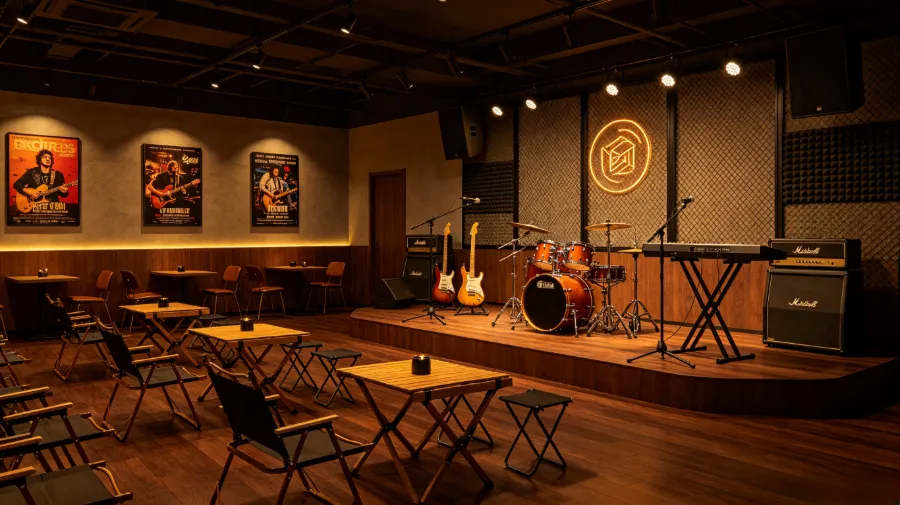
In this renovation case, VYLEN’s system acted as a plug‑and‑play standardized interface—once the lighting layout was decided, all circuits and smart central controls were ready-made, requiring no on‑site adaptation. This is crucial for old‑store renovations, where spatial constraints are far greater than in new builds.
The total renovation cost fell about 15 % from the 2022 peak, but only if you get it right the first time. If you mess up, the cost of a second construction can be a third higher than the initial work. Saving money in lighting projects is the easiest mistake to make—you save explicit costs but incur hidden losses.
FAQ
Can professional lighting design really directly improve customer satisfaction?
Yes. Data from Sing Enjoy KTV’s flagship store show a 98 % customer satisfaction rate and a 40 % increase in repeat purchases. The logic is straightforward: lighting directly affects dwell time and willingness to spend—people only order a second round when they feel comfortable. Satisfaction isn’t an abstract concept; it’s the sum of every consumption action.
I’m a new bar owner; which parameters should I focus on during the design phase?
Three parameters are most important: color temperature (suggested 2700 K–3000 K for main areas), CRI (no lower than 90), and illuminance layering (booth area 100–150 lux). Don’t just count the number of LEDs; these parameters determine the actual effect.
What is the most easily overlooked design issue when renovating an old bar?
Equipment compatibility. Many old‑store renovations aim to upgrade to smart dimming, only to discover that existing wiring doesn’t support new protocols or that fixture interfaces aren’t standardized. If this isn’t solved in the planning stage, it will explode during construction, and tearing down walls for rewiring can double the budget.
What are the key differences between lighting design for a live‑streaming room and a KTV?
A live‑streaming room requires higher CRI and more uniform frontal fill light to avoid shadows on the presenter’s face. KTV emphasizes atmospheric zoning and layering; the intensity difference between booth and stage areas can be three times or more. The core of a live‑streaming room is “clear visibility,” while KTV’s core is “comfortable viewing.”
Share Article