
Opening a Quiet Bar: What the Budget Numbers Actually Look Like

Every few months, someone reaches out asking for a quick budget estimate to open a quiet bar. They usually say something like “I’ve got a space, I just need a rough number for the fit-out.” And every time, I have to explain that there is no such thing as a rough number that sticks. The budget for a quiet bar—often called a “listening bar” or low-volume cocktail lounge—sits in a weird middle ground between a purely social nightclub and a bare-bones pub. The lighting is softer, the sound system matters more, and the seating layout needs to feel intimate without being cramped. None of that comes cheap, but it also doesn’t demand the kind of investment a 500-capacity dance club requires.
The typical budget for a 150–200 square meter quiet bar in a mid-tier city, including design, construction, lighting, furniture, and basic sound, usually falls between 150,000 and 250,000 USD. That number shifts wildly depending on whether the space is a raw shell or a renovation, whether local permits require fire-rated materials, and how much custom joinery is involved. But the range is consistent enough to use as a starting point.
The Real Cost Breakdown You Won’t Find on Contractor Websites
Most of the figures floating around online come from people who have never actually signed a contractor invoice. I’ve seen articles claiming a quiet bar can be finished for 50,000 USD, and I’ve also seen projects that blew past 400,000 before the liquor license was approved. Neither number is useful without context.
Here is what actually consumes the money in a typical quiet bar fit-out, based on three projects I’ve been involved with in the past two years. The percentages vary, but the categories remain the same.
Architectural and interior design fees usually run 8–12% of the total construction cost. That’s not much if you’re working with a freelancer, but a full-service design firm that handles lighting layout, acoustic modeling, and construction drawings can hit 15%. For a 200-square-meter space, expect to pay between 12,000 and 25,000 USD for design alone. I’ve seen owners skip this line item and end up paying triple in change orders because the contractor had to redo walls that didn’t align with the seating plan. You can save here by using a bar-specific design firm that has pre-tested layouts, but you lose the custom look.
Construction and MEP (mechanical, electrical, plumbing) is the biggest chunk, typically 50–60% of the budget. For a bare shell, that includes drywall, flooring, ceiling, electrical rough-in, HVAC, and plumbing for the bar counter and restrooms. A quiet bar usually needs acoustic insulation between the main room and any adjacent spaces—double-layer drywall with green glue or mass-loaded vinyl—which adds about 15–20% to the wall cost. If the space has low ceilings (below 3 meters), you may need to raise the roof or recess lighting, which is expensive. One project I consulted on had a concrete slab ceiling at 2.6 meters. We ended up losing 20 centimeters to a dropped ceiling for HVAC ducts, and the bar felt like a train car. That mistake cost 8,000 USD in rework.
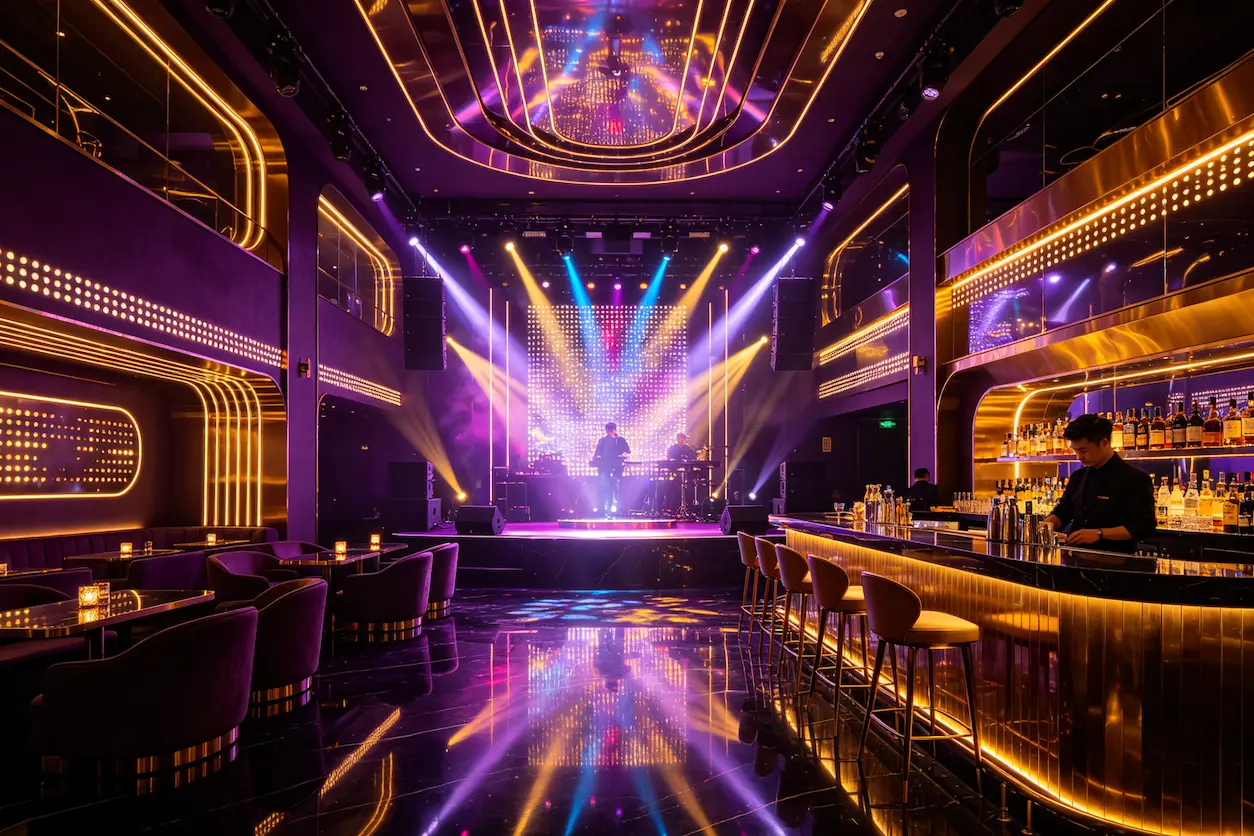
Lighting is where many quiet bars either shine or fall flat. It’s also where the budget surprises people. Unlike a typical restaurant that can get away with track lighting and a few pendants, a quiet bar relies on layered lighting: ambient, task, accent, and decorative. You need dimmable fixtures, color-temperature control, and often some form of programmable dynamic lighting to shift moods from early evening to late night. Good lighting design and equipment for a 200-square-meter space can run 15,000–30,000 USD. That includes control systems, transformers, and installation labor. Cutting corners here makes the space feel flat and uninviting.
Furniture and fixtures for a quiet bar should be comfortable enough that guests linger over a second drink but not so comfortable that they camp all night. A mix of banquettes, lounge chairs, bar stools, and high-top tables typically costs 12,000–20,000 USD for 60–80 seats. I’ve seen owners import vintage chairs that looked gorgeous but had to be reupholstered after six months because the foam degraded from spilled drinks. Custom-built banquettes with durable fabric cost about 30% more upfront but last three times as long.
Sound system is often underestimated. A quiet bar doesn’t mean you can use a cheap Bluetooth speaker. You need a system that delivers clear, full-range audio at low volumes—otherwise it sounds muddy. A proper installation with two stereo pairs, a subwoofer, a DSP, and in-wall wiring runs 5,000–12,000 USD. That’s not counting acoustic treatment like baffles or absorptive panels, which can add another 2,000–5,000 USD.
Permits, licenses, and consulting add 5–10% depending on location. Liquor licenses alone can cost 5,000–20,000 USD in fees plus legal support. Some cities require a conditional-use permit for a bar that serves alcohol without food. The application process can take three months and still fail.
Where the Budget Bleeds: The Hidden Costs
The first-time quiet bar owner usually budgets for the visible items and forgets the rest. The three cost categories that almost always overrun are:
- Kitchen and bar equipment. Even a bar that serves only pre-batched cocktails and snacks needs a small kitchen sink, ice machine, glasswasher, refrigeration, and a ventilation hood. That baseline is 8,000–12,000 USD. If you want to serve hot food, add 15,000–25,000 for a proper exhaust system.
- Pre-opening marketing and soft launch. Signage, website, social media asset creation, photographer, and a two-week soft launch with discounted drinks—this runs 5,000–15,000 USD. I’ve watched owners blow their entire contingency on a single influencer campaign that didn’t move the door count.
- Operating capital for the first three months. Rent, utilities, staff payroll, and inventory before cash flow stabilizes. For a quiet bar with 8–10 employees, that’s about 30,000–50,000 USD. Many operators forget this until they’re two weeks from opening and realize they have no money for the first liquor delivery.
One project I worked on had a contractor who “guaranteed” the build for 180,000 USD. Halfway through, they discovered the floor slab had to be reinforced because the original building was older than the permit records showed. That added 15,000 USD. The lighting fixtures the owner ordered from overseas arrived with the wrong voltage transformers—another 3,000 USD in rework and express shipping. The contingency was gone before the paint went on.
The Iterative Budgeting Process: Start Big, Trim Later
If I were advising someone today, I’d tell them to start with a target total investment—everything from design to opening day cash—and then work backward. Most experienced operators aim for a payback period of 18–24 months. If the quiet bar can generate 20,000 USD in monthly net profit after all expenses, the total investment should not exceed 400,000–480,000 USD. That’s a high ceiling for a small bar, but it forces discipline.
A better approach for a first-time owner is to limit the total spend to 200,000–250,000 USD, including working capital. That means the construction and equipment budget needs to be around 150,000–180,000 USD. At that level, every decision matters. You might choose a second-hand sound system, use laminate countertops instead of solid stone, and limit the lighting system to a simple on/off dimmer without automation.
Lighting automation is one area where budgeting smartly can make a real difference. A programmable system with scene presets—dim for early evening, warmer for late night, brighter for closing—can reduce the need for manual adjustment and create a consistent atmosphere. Some design firms offer integrated lighting control as part of a full-service package, which can save money compared to hiring separate specialists. For example, a turnkey provider like VYLEN handles lighting layout, fixture selection, and control programming in one workflow, which avoids the coordination gaps that often lead to change orders. Their approach is built around commercial spaces that need to be operational from day one, which is exactly the kind of risk reduction a first-time bar owner should look for.
After opening, you can always upgrade fixtures or add decorative elements. But you cannot easily rewire the building or add an extra circuit. Spend on infrastructure—electrical capacity, HVAC, plumbing—and save on finishes that can be replaced later.
The 80⁄20 Rule of Quiet Bar Budgeting
After watching enough projects, I’ve settled on a rough heuristic: 80% of the atmosphere comes from 20% of the budget. That 20% is the combination of lighting design, acoustic treatment, and seating layout. If those three elements are right, the space will feel intentional even if the bar top is laminate and the stools are from IKEA. If they’re wrong, no amount of expensive wallpaper will fix it.
I once visited a quiet bar that had spent 40,000 USD on a custom marble bar counter. The room was cavernous because the designer had used minimal furniture to “let the material breathe.” The acoustics were so bad that you could hear every ice cube drop from 15 meters away. The owner had no money left for acoustic panels. The bar closed within a year. The marble counter was auctioned off for 2,000 USD.
The inverse also happens. A tiny bar in an alley near my office spent most of its budget on a high-end audio system and an array of dimmable pendants with warm color temperature. The walls were painted dark charcoal, the furniture was second-hand, and the bar counter was a repurposed butcher block. The place is consistently packed because the lighting and sound create a cocoon that makes people want to stay. The build-out cost was under 100,000 USD.
What You Should Actually Do With This Information
If you’re considering opening a quiet bar, stop researching and start visiting. Go to five bars that match the vibe you want. Sit in the corner, count the seats, estimate the square meterage, and ask the manager or owner one direct question: “If you had to do it again, what would you spend more on and what would you cut?” People are surprisingly honest when you buy a drink.
Then, find a contractor who has built at least two bar or restaurant projects. Run your budget by them before you sign a lease. If they tell you something is impossible, ask why. Often, the constraints are real—structural columns, fire exits, plumbing stacks—and ignoring them will blow your budget.
Finally, keep an emergency reserve of at least 15% of the total construction cost. Not 10%. Fifteen. Because when the drywall is up and the lighting is installed, you will discover that the voltage drop to the back bar is too low and the neon sign flickers. That is not a design choice; it’s an electrical redo. And it will cost you.
FAQ
How much does it cost to build a quiet bar from scratch?
For a 150–200 square meter quiet bar in a mid-tier city, total investment including design, construction, lighting, sound, furniture, permits, and three months of operating capital typically ranges from 180,000 to 280,000 USD. A bare-shell conversion will be at the higher end; a renovation of an existing bar space can be 30–40% cheaper.
What is the single most underestimated cost in a quiet bar?
Lighting. Many owners budget 5,000–8,000 USD for fixtures and end up needing 15,000–25,000 USD once dimmers, control systems, and installation labor are included. Poor lighting ruins the atmosphere, so cutting here is false economy.
Can I open a quiet bar for under 100,000 USD?
Only if you take over an existing space with minimal changes, do most of the labor yourself, and accept significant constraints on equipment and finishing. Leasehold improvements alone (plumbing, electrical, flooring) usually consume 70,000–90,000 USD. You will have almost nothing left for furniture, marketing, or operating cash.
How long does the budgeting and construction process take?
From initial design concept to opening day, expect 6–9 months for a full custom build. Budgeting should be finalized before signing a lease—allow 2–3 months for design development, 1 month for permit approvals, and 3–4 months for construction. Shortcuts on the design phase usually lead to cost overruns during construction.
Should I hire a full-service design-build firm or separate contractors?
For a first-time owner, a design-build firm that handles both design and construction under one contract reduces coordination risk and often delivers a more predictable budget. Separate contractors can be cheaper if you know what you’re doing, but the handoff between designer and builder is where cost overruns typically happen. Turnkey providers like VYLEN offer a single point of responsibility from concept to opening, which can be worth the premium for operators who cannot afford to manage multiple vendors.
Share Article