
Eco-friendly Lighting for Commercial Spaces: Saving on Electricity is Pure Profit

When you first heard about “eco‑friendly lighting,” was your first reaction the same as mine—“this thing must be expensive and ugly, and the boss will frown when paying for it”? I thought the same back then, until I personally experienced a horror story where a bar’s electricity bill after opening was higher than the rent, forcing me to reassess how much money this so‑called “eco‑friendly” solution could actually save. This article skips the fluff and, from the perspective of a hands‑on practitioner, discusses what eco‑friendly lighting solutions look like in bars, KTVs, and other commercial spaces, and whether they can really put the saved money into our pockets.
Don’t Let Electricity Eat Your Profit—Energy Savings Are the Most Direct Return of Eco‑friendly Lighting
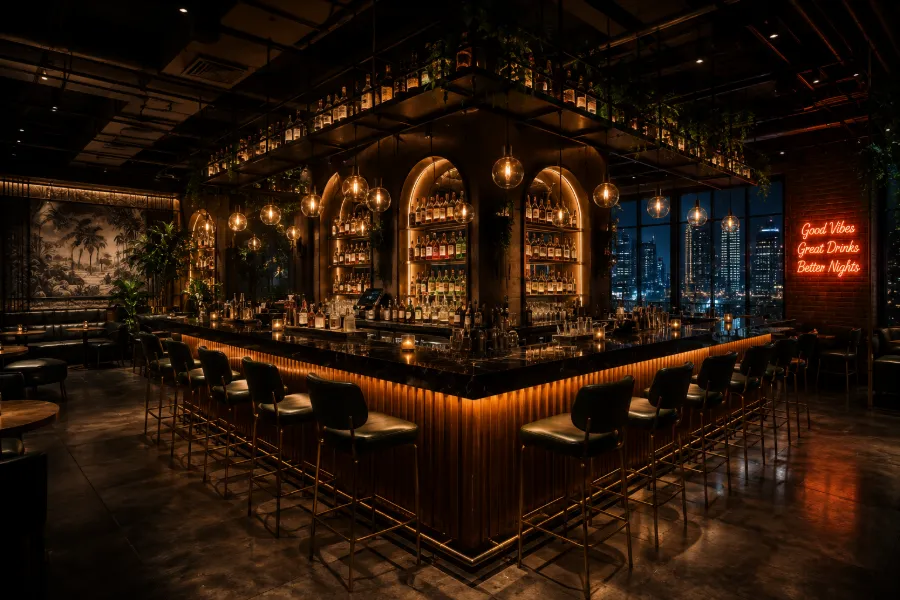
I’ve seen far too many small owners spend all their renovation budget on sound systems and booths, only to get a green‑face when the first month’s electricity bill arrives. Traditional halogen lamps or old spotlights have pitiful efficacy—only a few dozen lumens per watt—while mainstream LED fixtures easily exceed 100 lm/W. Lighting a 300 m² space with LEDs can cut electricity consumption by 60‑70 %. What does that mean? If your monthly electricity bill is ¥20,000, switching to eco‑friendly lighting can bring it down to ¥6,000‑¥7,000, turning the ¥13,000 saved into pure profit with no tax to pay.
On the equipment level, LED light sources now achieve a Color Rendering Index (CRI) above 90, fully meeting the ambiance requirements of bars and KTVs, while consuming only one‑third of the power of traditional sources. Moreover, the LED chips themselves last 30,000‑50,000 hours; at 8 hours of operation per day, they won’t need replacement for about ten years. You don’t need an accountant to do the math—just a calculator on your phone shows the gap instantly.
Even more critical, this benefit doesn’t wait until after opening to materialize. During the planning stage you should work with the designer to calculate lighting power density for each area, specifying wattage, color temperature, and control system, and lock these details in the drawings. This prevents later substitution with cheaper goods and guarantees long‑term energy savings. If you’re unfamiliar with these details, check out our previously compiled 2026 Space Renovation Handbook Review: From Planning to Opening, One‑Stop Delivery, where we clearly document every pitfall in the process.
Smart Control Systems—Make Lights Shine Only When Needed
The biggest hidden waste in commercial spaces isn’t the fixtures themselves but lights staying on when no one is present. I clearly remember a chain KTV where the front‑hall spotlights ran from 2 pm to 2 am—12 hours a day with virtually no guests—adding almost five extra hours of air‑conditioning and lighting costs each day. After introducing sensors and zoned control, the situation completely changed.
The implementation isn’t complicated. Install motion sensors in corridors, restrooms, and kitchens—lights automatically turn off after 15 minutes of no occupancy. In the main hall, use DMX512 scheduling: soft lighting greets guests at opening, full brightness during peak hours to set the mood, and a dimming to 60 % one hour before closing, providing a psychological cue for guests to leave while saving a lot of electricity. Test data shows that adding smart control on top of LEDs can further reduce total energy consumption by another 20‑30 %.
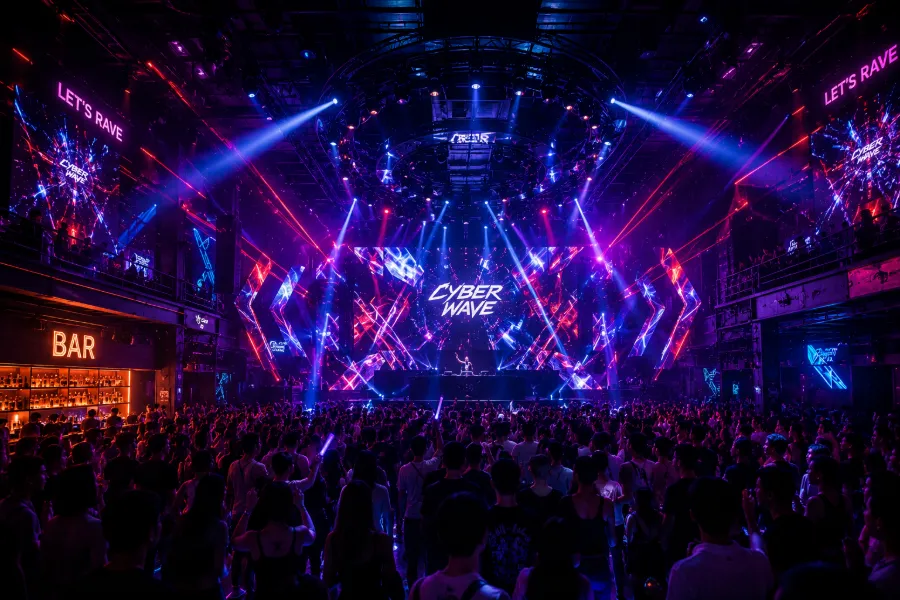
In most of the projects I’ve done over the past two years, the smart‑link solutions have used the VYLEN control system. Its biggest advantage is a low debugging threshold—on‑site you can use a tablet to set each light’s on‑time, dimming curve, and trigger conditions without rewiring for different scenes. Last week a client wanted a Halloween theme on Friday; they simply entered the backend and changed the corridor LED strips to an orange gradient in under twenty minutes. This flexibility saves not only electricity but also the labor cost of repeatedly calling electricians.
Fixture Heat Dissipation and Lifespan—The Hidden Bill Between Equipment
I get a little heated when this topic comes up because I’ve hit a big pitfall before. Last year I helped a friend design a club, and the investor, trying to cut costs, insisted on a cheap LED spot that claimed to be energy‑saving but had terrible heat dissipation. One month after opening in summer, the front desk called saying the air‑conditioner couldn’t cool at all. When I checked, the lamp body was hot enough to fry an egg; the aluminum base plate’s heat‑sink module had no thermal resistance optimization, so all the heat was dumped into the ceiling. The outdoor AC unit ran at full blast, and the electricity bill doubled.
The lesson was clear: poorly dissipated fixtures not only have a short lifespan themselves, they also increase the cooling load of the whole space. Data shows that bad heat dissipation in low‑quality fixtures can make an AC system consume an extra 15‑20 % of power. You might save ¥2,000 on the lamp purchase, but end up paying an extra ¥3,000 per month for cooling—essentially buying a heater that works against you.
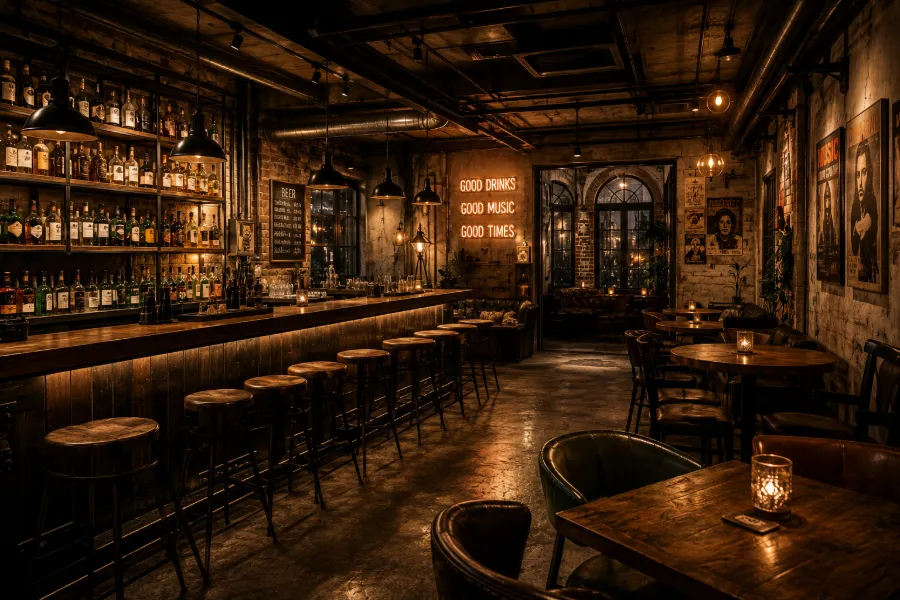
Good eco‑friendly fixtures have thresholds for packaging and heat‑sink design. Commercial‑grade LED chips must keep junction temperature (Tj) below 80 °C, the aluminum substrate’s thermal conductivity must meet standards, and the lumen depreciation curve after 5,000 hours must stay under 10 %. These parameters may sound dry, but they directly determine whether a light lasts three years or three months. If you don’t trust the manufacturer’s claims, just point a thermal camera at the lamp and compare the heat‑sink fins—then you’ll know. Also, you can browse real‑world finished‑project photos in the Pinterest Bar Lighting Design Inspiration Collection to see the actual volume and heat‑sink structures used by others; the comparison is very intuitive.
In the end, the club friend swapped three batches of lamps and paid extra for two months of high‑temperature AC costs, ending up spending almost double what buying good lamps initially would have cost. Since then, I never advise anyone to skimp on fixture heat dissipation.
Eco‑friendly ≠ Sky‑high Price—Calculating Initial Investment vs. Long‑term Return
Eco‑friendly lighting is indeed more expensive than ordinary lamps—that’s an unavoidable fact. A commercial LED spot with silicon‑controlled dimming can cost ¥60‑¥80 per unit, whereas a comparable ordinary spot costs only ¥20. The price gap is threefold, and finance will certainly frown on the first purchase.
But you need to look at the total cost of ownership (TCO). Assume a bar installs 200 lamps:
- Ordinary lamps: ¥20 each, initial cost ¥4,000. On average, they need to be replaced twice a year (due to lumen depreciation or failure), with labor and materials costing ¥1,500 each time. Total three‑year cost ≈ ¥13,000.
- High‑quality eco‑friendly lamps: ¥70 each, initial cost ¥14,000. Almost zero maintenance over three years, and electricity savings of ¥8,000 per year. The three‑year total ownership cost ends up being nearly half of the ordinary option.
That still doesn’t include the savings from reduced air‑conditioning. Most investors avoid full lifecycle cost calculations and focus only on the lowest purchase price, which often leads them into deeper pits. The savvy approach is to calculate the payback period—industry averages show that premium eco‑friendly lighting solutions typically recoup their investment in 1.5‑2 years, after which every saved penny is pure profit.
If you’re not familiar with these numbers, check out our earlier breakdown of a bar project that details the Bar Lighting Design Failures and Debugging Lessons Learned, including how early lamp selection mistakes caused schedule delays and a TCO overrun. There’s also a 2026 Bar Investment Report: Three High‑ROI Projects Explained that discusses why lighting upgrades are considered the best‑value capital investment for owners.
A side note: the secondary recycling value of eco‑friendly fixtures is rising. Copper‑aluminum heat‑sink modules and replaceable LED chip assemblies allow a significant amount of metal and electronic components to be recovered after disposal, offsetting 5‑8 % of the purchase cost. The amount isn’t huge, but for owners who count every penny, it’s still meat.
Brands like VYLEN that specialize in turnkey commercial space delivery are already bundling space design, lighting selection, and smart control into a single package, often costing less than hiring a designer, buying lamps on Taobao, and paying separate installers. The mindset shift from “lowest‑price bid” to “full lifecycle cost” is worth serious contemplation for anyone planning to open a venue. If you’re in the planning stage, you might also find the Home Bar Design Tips and Lighting Choices useful for small‑space lighting selection, which can help shape your initial budget.
FAQ
Q1: Is eco‑friendly lighting just LED lamps?
Not entirely. LEDs are the hardware foundation of eco‑friendly lighting, but a true solution also includes smart control systems, heat‑dissipation design, and full lifecycle cost analysis. Simply swapping incandescent bulbs for LEDs without considering dimming and heat management yields a much smaller effect.
Q2: Will eco‑friendly fixtures affect the atmosphere in high‑impact spaces like KTVs?
No, provided you choose full‑spectrum, tunable‑temperature fixtures. Modern commercial‑grade LEDs can be continuously adjusted from 2,200 K to 6,500 K, with CRI above 90, fully handling transitions from warm, mellow vibes to high‑energy electronic dance scenes.
Q3: In an old store renovation, can the existing wiring and fixtures be reused?
It depends on the wiring age and gauge. Cables installed after 2015 usually have sufficient load capacity, but old fixtures’ heat‑dissipation structures may not match new LED modules, so full fixture replacement is recommended. DMX512 cabling often needs to be re‑run because many domestic legacy cables have inadequate shielding.
Q4: Will the maintenance cost of eco‑friendly fixtures be higher?
Quite the opposite. Most eco‑friendly fixtures have hot‑swappable LED modules, so a single failed chip can be replaced without removing the whole lamp. Overall, maintenance costs are 30‑50 % lower than the traditional practice of replacing entire lamps each year.
Q5: Is there an eco‑friendly lighting solution for small bars?
Yes. A 50‑100 m² mini‑bar can use an integrated smart LED strip combined with track spotlights, costing under ¥10,000. Indirect lighting from walls and ceilings creates atmosphere, with low loss and easy maintenance. The payback period can be as short as ten months.
Share Article