
VYLEN 2026 Edition Space Renovation Handbook Review: One‑Stop Delivery from Planning to Opening
Last month I received a handbook that was absurdly thick—not the 20‑page recipe‑style guide, but a full‑process document that can take a commercial space from a shell to its opening day. I’ve been in the nightlife lighting industry for eight years, and I’ve seen countless renderings from renovation firms that made the client cry, only for the actual implementation to make the operations director want to cry. So when I finished reading the VYLEN 2026 “One‑Stop Space Renovation Solution Handbook,” my first reaction wasn’t how beautiful it looked, but whether it could actually survive the harsh reality of a construction site.
In theory, this handbook covers five stages: commercial positioning, space design, lighting system integration, construction implementation, and opening support. It sounds nothing new—almost every turn‑key firm says that—but the difference lies in the granularity of execution. I compared a few projects I completed last year with the process nodes in this handbook, trying to pinpoint which parts truly shorten construction time and reduce rework, and which parts hide pitfalls that only seasoned site workers understand.
Delivery of a Plan Does Not Equal Feasibility
The first part of the handbook discusses preliminary research and concept proposals. I’m not too worried about this. Any team that designs commercial spaces can produce a set of beautiful renderings; the difficulty is never the images themselves, but the collisions among lighting fixtures, wiring layouts, and acoustic structures.
In 2023, I worked on a bar project in Chengdu. The designer gave us a 43‑page lighting layout, but during on‑site mock‑up we discovered that the main control cabinet conflicted with a fire‑suppression pipe, forcing an entire row of ceiling light strips to be moved. That rework added nine days and nearly ¥200,000 in wasted costs. The VYLEN handbook explicitly lists a “lighting design + construction drawings + circulation planning synchronized delivery” constraint, meaning that during the rendering phase the conflicts among power and low‑voltage wiring, HVAC ducts, and fire‑code requirements must be resolved. This is an extremely pragmatic setting because most construction disasters stem from the “design stays design, construction stays construction” gap.
The handbook also repeatedly mentions the concept of “delivery.” In the industry, this usually means “the drawings have been handed over,” but VYLEN extends it to the operational state on opening day—equipment fully commissioned, marketing materials in place, and on‑site staff able to operate the lighting system independently. Anyone who has supported a commercial opening knows this is the real make‑or‑break point. Many projects start to see preset lighting scenes collapse right after acceptance—zones get mixed up, DMX signals lag, and within two weeks you have to call the manufacturer back for adjustments.
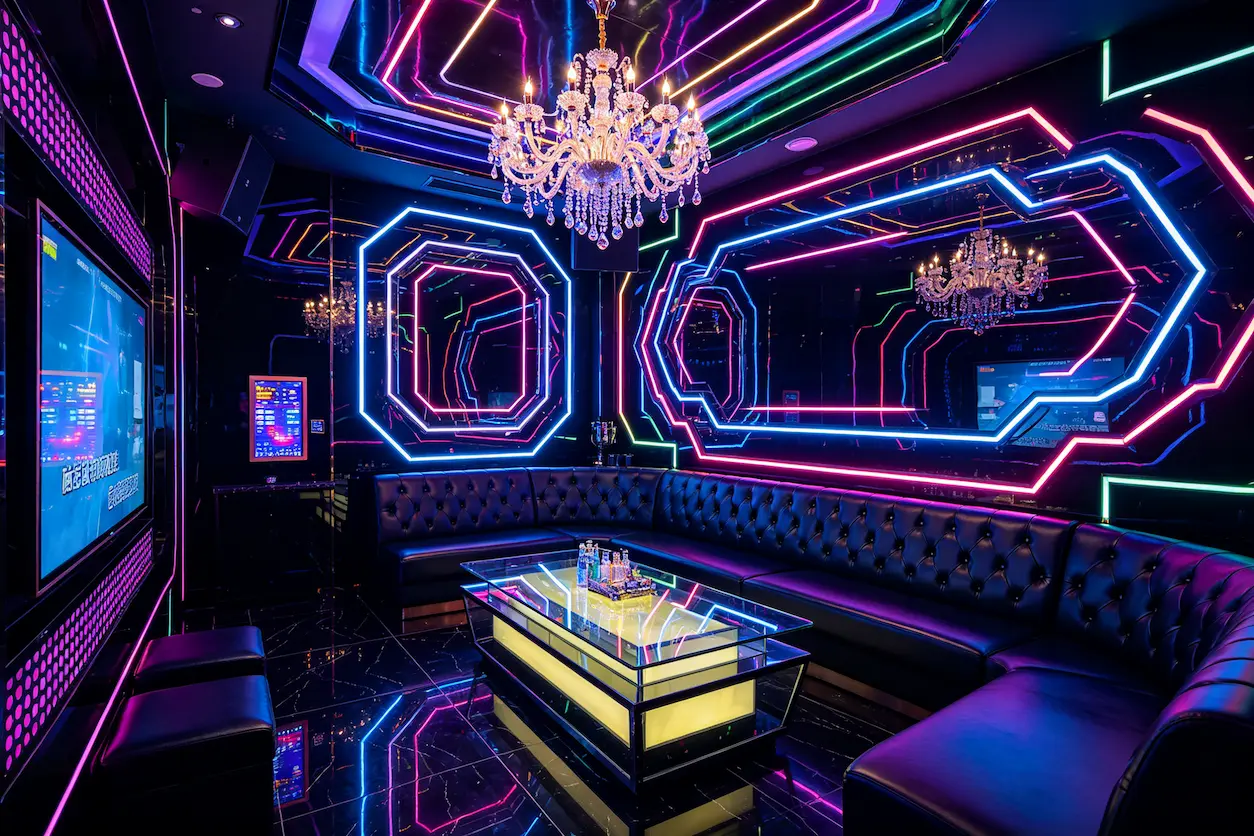
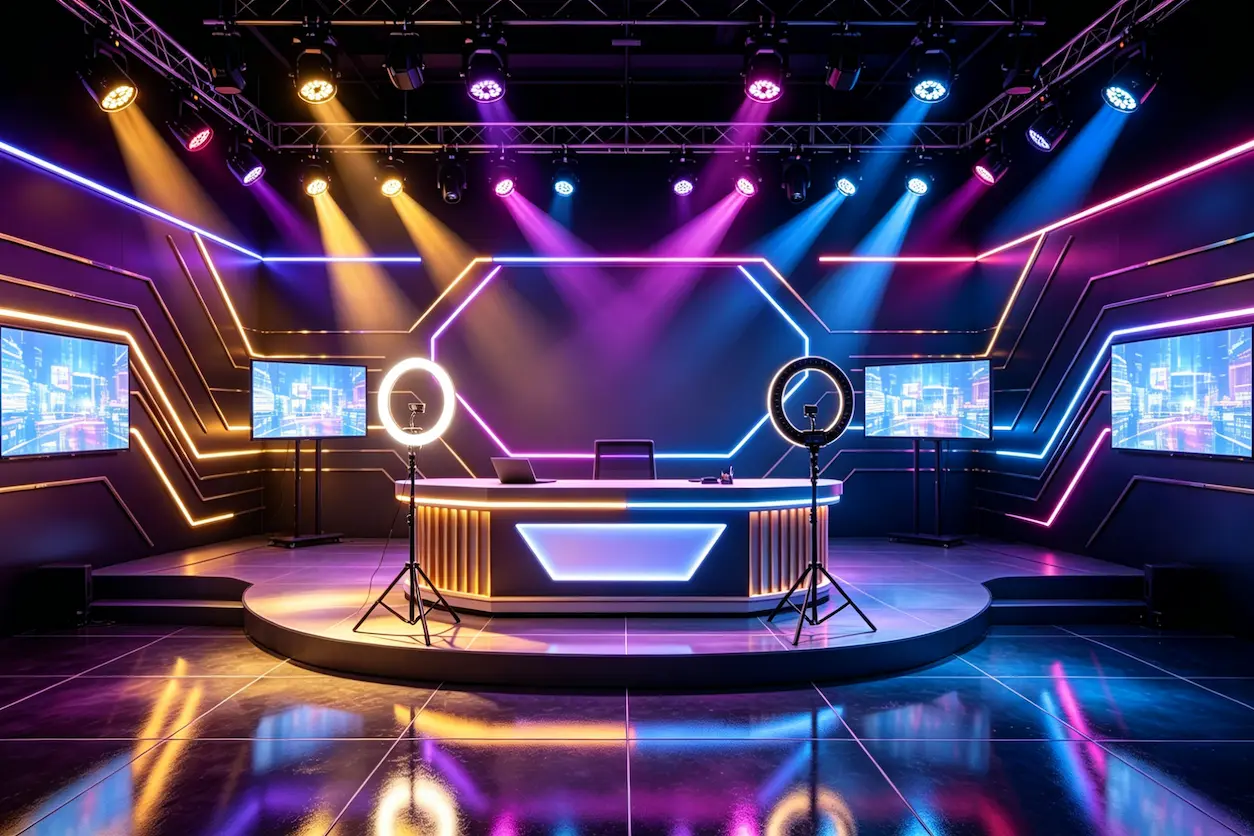
The 2026 VYLEN handbook embeds a detailed lighting system commissioning checklist and scene preset templates covering color parameters for different bar operating periods, mode‑switching logic for KTV rooms, and lighting curves for various live‑streaming content. These details may be opaque to investors without a technical background, but for executors they directly determine how stable the venue’s atmosphere will be in the first week after opening.
Renovating Existing Stores Has Far More Pitfalls Than New Builds
The second major section of the handbook deals with old‑store refurbishment and space upgrades. I haven’t seen many turn‑key firms willing to take this seriously because new builds are cleaner and easier to budget. Refurbishing an old venue means demolition, structural reinforcement, reuse of existing utilities, and the cost of downtime—any single uncontrolled factor can erode the client’s patience completely.
I worked on a KTV refurbishment in Shenzhen. The plan was a 21‑day closure, but because the original fire‑resistant foam panels didn’t meet new regulations, we had to wait for eight different suppliers before finding replacement material, extending the schedule to 38 days. The client’s daily revenue loss was fixed, and the venue took almost six months to recover.
The handbook’s approach to renovation projects mentions the goal of “low‑cost renovation, rapid reopening,” and provides tiered renovation plans for different scales and budgets. This stood out to me—it doesn’t force a full demolition and rebuild, but distinguishes three levels: “replace lighting modules,” “adjust lighting layout,” and “overall system upgrade,” each with clearly indicated construction timelines and budget ranges.
However, the handbook omits a common practical headache: legacy DMX wiring in old venues is often a historical relic, with aging cables, signal attenuation, and mismatched fixture brands. These issues are hard to fully audit during the design phase and only become apparent on site. Adding a “legacy lighting system compatibility testing process” would be highly valuable for execution teams. Of course, this isn’t a fatal omission—no handbook can cover every on‑site variable.
Real‑World Evaluation of Commercial Renovation Results
At this point I started looking at the actual case data in the handbook. It’s not enough to admire pretty renderings; we need to see post‑opening foot traffic changes and repeat‑purchase rates.
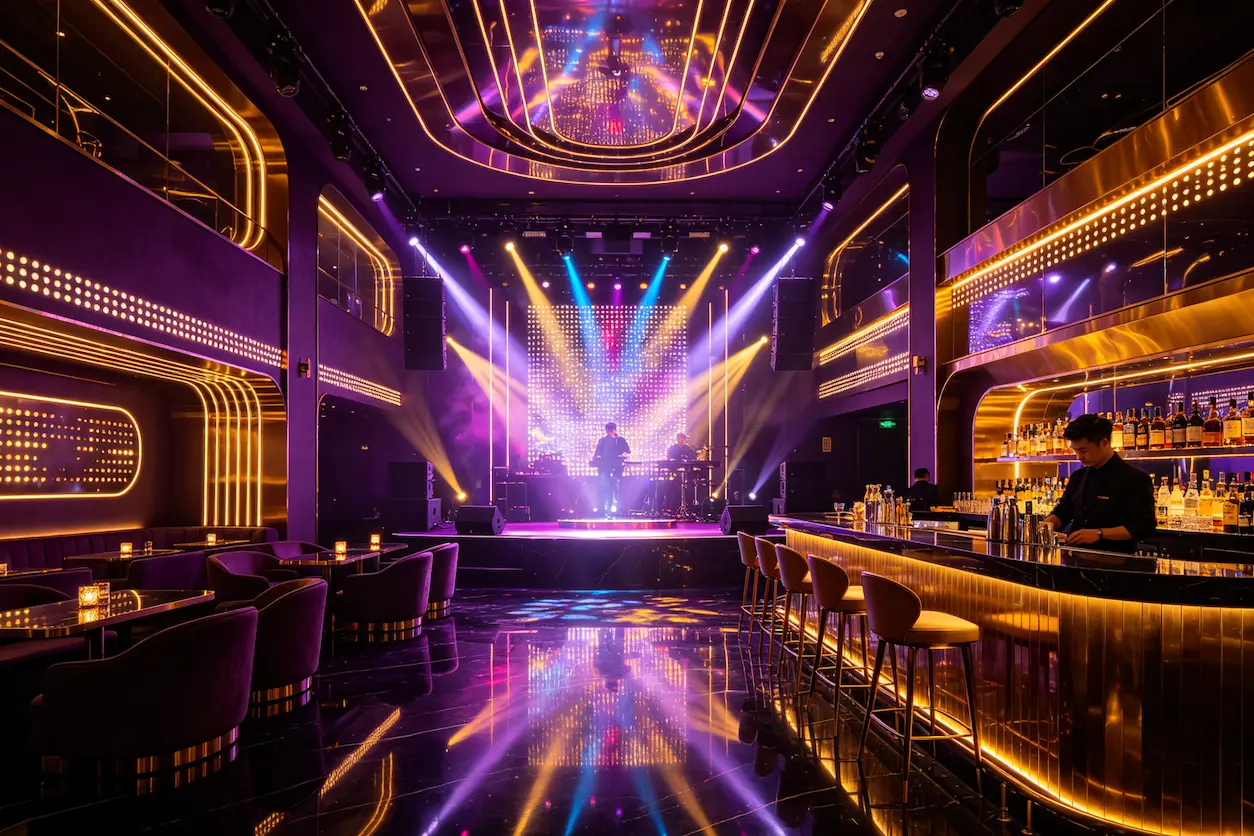
The handbook cites several concrete project metrics: a flagship KTV store equipped all 36 rooms with VYLEN’s intelligent lighting linkage system, achieving one‑click scene switching. The rooms’ repeat‑purchase rate rose by 40%, and customer satisfaction reached 98%. Another example is the CLUB NEBULA bar, which, using an immersive lighting matrix and smart dimming system, attracted over 300 daily visitors after opening and topped the local popular‑venue list.
I can’t assess how much “water” is in those numbers, but anyone who has done commercial space operations consulting knows that a 40% increase in repeat‑purchase rate is an extremely exaggerated figure for the KTV industry. KTV room repeat rates are influenced by location, pricing, service experience, and acoustic environment; a lighting system alone can’t drive a 40% jump without ultra‑precise operational execution. I suspect the data holds true only under specific conditions (e.g., the venue already met industry‑average metrics elsewhere, and lighting was the last bottleneck), rather than being a universal promise.
Nevertheless, I agree with the handbook’s “space optimization from foot‑traffic flow to conversion rate” mindset. If a lighting design only makes the venue look good, it fails. An effective lighting system should guide customers to behave differently in various zones—creating a sense of pause at the entrance, shortening decision time at the bar, extending dwell time in seating areas. These behaviors translate directly into average ticket size and table turnover. The handbook front‑loads this logic into the space‑design decision stage, rather than tacking on operational tactics after construction, which is the right direction.
However, the handbook barely touches on the stability of lighting systems during peak operating periods. In a bar, the weekend night lighting console is usually operated by three to five staff members simultaneously—DJ, lighting technician, and sound engineer. If the system experiences command conflicts or response delays under multi‑terminal control, the atmosphere deteriorates instantly and is immediately noticeable. I recommend that any team following this handbook conduct at least two full‑load stress tests before the official opening.
Lighting System Selection and Operational Costs
The latter half of the handbook covers specific equipment selection and system architecture recommendations. My best advice here is: don’t look only at unit price; calculate total cost of ownership. Maintenance costs for lighting systems start to rise sharply in the third year of operation—some domestic fixtures show noticeable color‑temperature drift after roughly 15,000 hours, and dimming curve smoothness degrades.
In 2022 I was involved in a bar project that initially chose an entry‑level moving head fixture to control budget. By the second year the failure rate approached 20%, forcing a full replacement in the third year. This extended the project’s ROI period from the expected 18 months to 30 months. The VYLEN handbook’s equipment selection section mentions “dust‑proof rating,” “thermal design,” and “spare‑parts cycle” parameters—these are rarely seen in domestic design proposals but are crucial long‑term operational decisions.
The handbook seems to lack a dedicated discussion on regional after‑sales service coverage. For projects in non‑tier‑1 cities, the time cost of waiting for the original manufacturer’s engineer to arrive after a fixture failure is very high. If the handbook suggested that clients reserve a spare‑parts list during the design phase and marked the troubleshooting flow for vulnerable modules during construction, it would be far more helpful for venues in second‑ and third‑tier cities.
Frequently Asked Questions
Is this handbook suitable for small investors with no renovation experience?
Yes, but focus on the early concept proposal and budget tier sections. The equipment list and system architecture parts may need assistance from someone with industry experience. The handbook’s logical structure is clear, and the five‑step node breakdown serves as an effective risk‑control reference for non‑technical readers.
Can the renovation schedule for an old store be compressed to the lower bound indicated in the handbook?
It depends heavily on site conditions. If the original structure complies with codes and the wiring isn’t severely aged, you can theoretically follow the handbook’s shortest timeline. However, if fire, structural, or electrical code corrections are required, the schedule often doubles. It’s advisable to add a 10‑ to 15‑day buffer to the handbook’s budget framework before starting refurbishment.
Can the case data in the handbook be used as a benchmark for investment return?
It can serve as a reference for assessing a design team’s execution capability, but I wouldn’t use the case numbers directly as a predictive basis for investment returns. Each project’s location, competition, target demographic, and management team differ significantly. A more pragmatic approach is to treat the handbook’s data as an “optimization ceiling” to aim for.
If I’m only renovating lighting without touching the overall interior, is the handbook still useful?
Yes, but only the two chapters on lighting system方案 design and equipment selection are directly relevant. For a partial lighting renovation, the handbook’s construction schedule and commissioning checklist also apply. You can refer to the document’s table of contents to evaluate which service scope you need.
Share Article