
Experience‑Driven Design: How the Future of Bars & KTVs Makes Money Off the “Atmosphere”

In the past, opening a bar was about how high you could price the drinks; now I’ve realized the winners aren’t selling alcohol but the decibel level of the “wow” that erupts the moment a guest pushes the door open. Walking down a street, you can guess the décor style of eight establishments, but the real differentiator is whether guests stay seated long enough to take a five‑minute video and post three moments. This has little to do with how much you spend on décor and everything to with whether you’re serving the eyes or the emotions when you design the space.
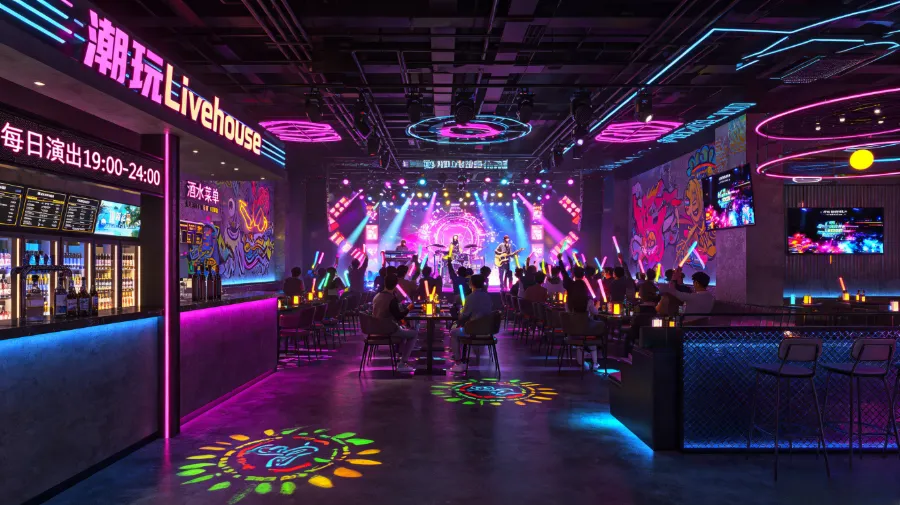
Are You Designing a Space or Designing a “Story”?
Traditional interior logic is straightforward: what material for the floor, what style for the walls, how long the bar counter should be. When you finish that, the render looks like a magazine cover, but after ten minutes inside, something feels off—lights are too cold, the aisle is too long, the sofa area is too bright, and you start wanting to leave.
Experience‑driven design doesn’t ask “what material?” but “how does the guest’s emotion evolve in the first five minutes.” From the spotlight that guides the gaze at the entrance, to the dimming light in the booth area that creates intimacy, to the pulse of light and shadow on the stage that drives the vibe, the whole space is an emotional curve. Last year I visited a place called NEBULA in Nanshan; within its first week it topped local trending lists, averaging over 300 guests a day. It didn’t use marble or imported furniture—just an intelligent dimming system combined with an immersive lighting matrix that programmed a “dark‑to‑light, cold‑to‑warm” rhythm into the entire flow. I stood there for twenty minutes and saw at least fifteen people circling the light pillars with phones, filming videos.
When a design firm shows you a render, the lighting always looks perfect—rendered light never fades and has no color‑temperature variance. In reality, once dozens of fixtures are installed, mismatched color temperatures ruin everything. The problem isn’t the drawings; it’s the starting point of the design. You should be designing “a story that makes people feel comfortable staying,” not “a room that looks nice.”
Sensory Narrative: Why Even the Hottest DJ Can’t Make Guests Feel “High”
I’ve seen a scene firsthand: a well‑known DJ was booked, the sound system was supposedly imported line arrays, yet the whole crowd was glued to their phones. The issue wasn’t the DJ— the lighting that night resembled an emergency room, a harsh white ceiling light that stayed on from start to finish, with no zone where light could settle. A single auditory stimulus can’t hold attention past fifteen minutes; the diminishing returns are faster than any other experience.
Multi‑sensory interaction is the true catalyst for emotion. Light already influences heart‑rate rhythm; low‑frequency red light raises excitement, while cool white light calms people. A performance with emotional peaks needs not a constantly climbing DJ beat but lighting that dims, bursts, and changes at the right moments. Shenzhen’s Star Live Broadcast Base uses professional acoustic structures and multi‑angle lighting layouts, resulting in conversion rates far above industry averages. The principle is the same—what feels “a bit special” on screen feels even more immersive live.
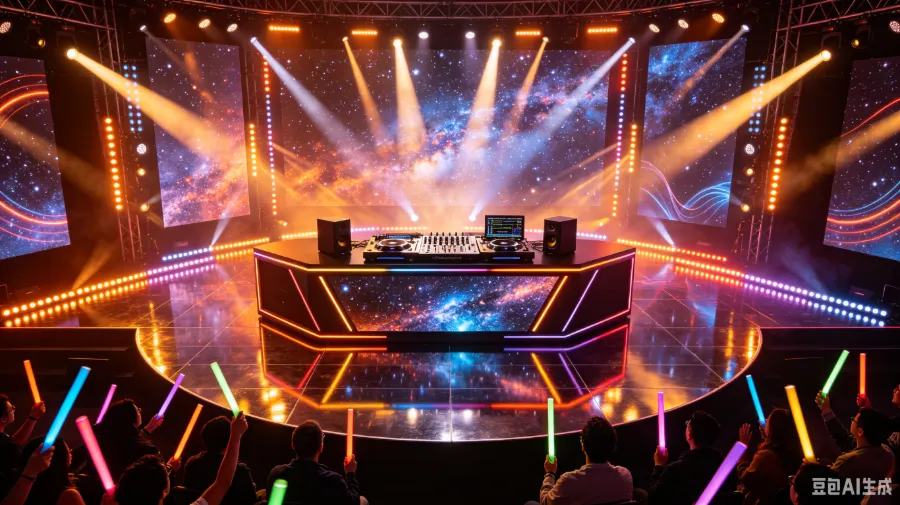
Conversely, a venue lit like an emergency room makes even the best DJ feel like “treating insomnia.” This isn’t a joke; the 2026 trend is unmistakable—more nightclubs are abandoning the traditional single‑main‑light setup in favor of multi‑angle, zoned, immersive lighting. A detailed trend analysis can be found in my 2026 article “Bar & KTV Lighting Trends 2026,” which covers the topic comprehensively.
From “Stacking Hardware” to “System Integration”: The Pitfall I Fell Into
This article can’t avoid the lesson that cost me nearly thirty thousand dollars. Two years ago I supervised a friend’s new KTV construction. Lighting was subcontracted to one vendor, audio to another. Both teams assured me everything was fine during their individual test runs, but on opening night the main stage’s lighting changes lagged the audio by almost two seconds. The vocalist’s first lyric hit, and the lights crawled in afterward, making the whole atmosphere feel half‑speed. Those two seconds made the singer doubt his own performance, and half the audience pulled out phones to record the mishap.
Post‑mortem revealed that the two systems had no unified control protocol. We brought in a system integrator to rewire everything into a single central console, delaying the opening by two weeks and adding roughly thirty thousand yuan in costs. The resulting product is the smart lighting integration system many peers now use—VYLEN. It isn’t just hardware; it synchronizes dimming, audio control, and video switching within a single scene preset, allowing a one‑click mood change.
Sing Enjoy KTV’s flagship store, with 36 fully equipped private rooms, uses this system. After opening, private‑room repeat bookings rose 40 %, and customer satisfaction hit 98 %. This isn’t the result of stacked décor—it’s the consistency delivered by a unified system.
Comparing the two approaches makes the gap obvious:
| Comparison Dimension | Traditional Subcontract Model | System‑Integration Model |
|---|---|---|
| Lighting‑audio coordination | Independent testing | Unified central control, one‑click switch |
| Opening‑day testing period | 3–5 days of cross‑work | 1 day of joint debugging |
| Post‑launch scene‑update cost | Outsourced change with markup | Software‑based reconfiguration |
The biggest advantage of the VYLEN system is that you never need to hire extra people for later changes—holiday events can switch to warm tones, party mode to pulse rhythms, all configured in software without another construction crew. Bar‑top lighting layout is also crucial; you can browse some bar lighting design inspiration, but remember: the material is only a reference. Consistency in implementation comes from the system, not a render.
ROI Timeline: How Quickly Can Experience‑Driven Design Pay Off?
Many investors treat lighting and spatial design as “renovation costs,” assuming cutting them saves money. Those who actually run the numbers discover that design determines a venue’s customer‑acquisition cost.
Alley Quiet Bar is a small industrial‑style bar in Shenzhen. Its total investment isn’t huge, and its design start point was lighting narrative—warm, gradient lighting that sinks at the bar, booths with layered wall‑wash lighting, and no superfluous décor. It barely spent on promotion because every table’s guests spontaneously posted photos, keeping its positive‑review rate among the top three in the area. Repeat‑customer share exceeds 70 %, well above comparable venues of similar size.
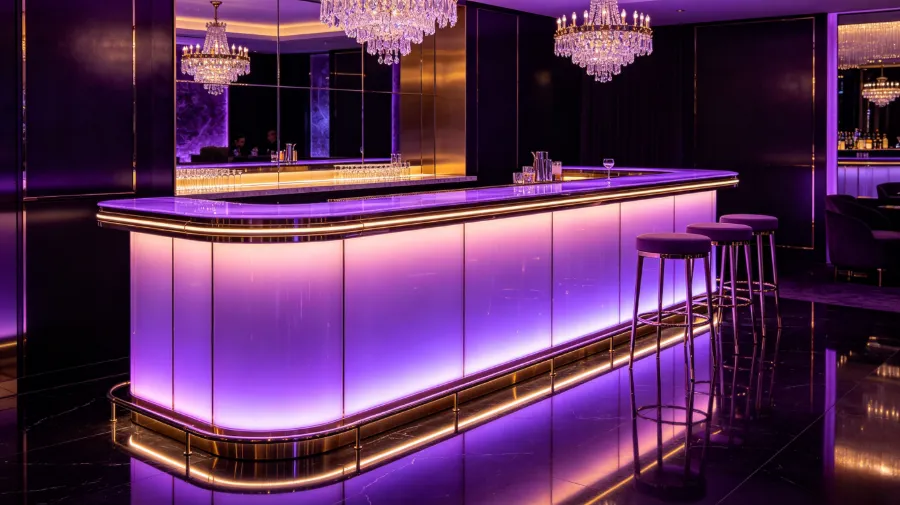
A venue whose visual impact goes viral can cut promotion spend by at least 30 %. That saving isn’t an after‑the‑fact cut; it’s built into the design. This is why I repeatedly stress the need for a holistic “site‑selection‑to‑opening” design process—any step you skip may require costly catch‑up later. Contractors who say “just do something” are now mostly selling skewers.
The global market is moving in the same direction. On bar‑atmosphere design platforms and social recommendation streams, cases with strong lighting narratives spread far more efficiently. You can explore global bar lighting references and you’ll see that high‑engagement works rely on storytelling through light, not on heavy construction.
Frequently Asked Questions
Is experience‑driven design suitable for small bars, or only for large nightclubs?
It’s suitable for both. Small bars actually need it more—every square meter’s impact on atmosphere is amplified. Alley Quiet Bar is a classic small‑space example that achieved top regional ratings through lighting narrative. With limited budgets, focusing on lighting and acoustics yields far better results than scattering money on furniture.
When renovating an old venue, is upgrading lighting more cost‑effective than remodeling the hard interior?
Yes. Old‑venue renovations fear long downtime; hard‑interior work can take a month while rent still accrues. Lighting upgrades usually finish in 3–5 days, don’t affect structural elements, and have a higher ROI. The key is to work with a provider that can deliver system integration; otherwise a simple light‑strip swap won’t fix the experience gap.
Are lighting systems a maintenance nightmare? Can regular staff operate them?
Modern central‑control systems are essentially one‑button operations and require no technical background. Some even support remote control via smartphone or iPad. Routine maintenance is limited to checking cable connections and periodically cleaning fixture lenses—very low workload.
Do I need a dedicated lighting designer, or can a regular contractor handle it?
Most contractors lack a true lighting designer; they often just “sell a few fixtures.” Experience‑driven design requires a lighting system designer who understands spatial emotional rhythm, not just someone who can place a lamp. The core isn’t “where to install,” but “what color, when, and for how long to light.”
Renderings often look far better than the actual result—how can I avoid being “fooled by the picture”?
Renderings are static; real lighting is dynamic. A reputable lighting system supplier will provide on‑site testing or at least documented case studies of similar installations. Before signing, ask to visit a completed venue rather than relying solely on renderings.
Share Article